Okavango Delta
A UNESCO wetland where the Okavango River never reaches the sea, instead spreading into 15,000 square kilometres of channels, islands and extraordinary wildlife density.
The Okavango Delta and wildlife safaris
Botswana is known for wildlife areas including the Okavango Delta, Moremi Game Reserve and Chobe National Park. Safari itineraries commonly combine different habitats and small lodges or tented camps.
Average daytime highs · °C
Maun, Botswana (modelled reference) · 1991–2020
There are no current Botswana deals on TripBuster. An independent travel expert can help you explore dates, hotels and a budget that works for you.
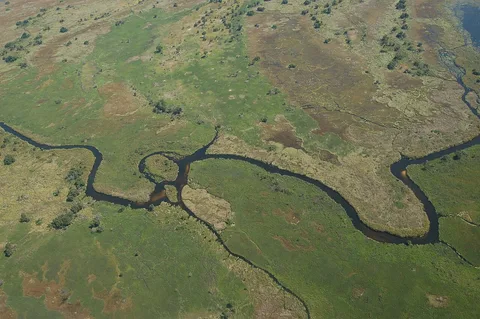
Africa's water safari, where the elephants outnumber the tourists by a long way
Explore Okavango Delta & ChobePhoto by Joachim Huber on Wikimedia Commons, CC BY-SA 2.0 (https://commons.wikimedia.org/wiki/File:Okavango_Delta,_Botswana1.jpg)
The experience varies by season and camp location, especially in the Delta where water levels affect activities. Compare transfers between camps, park fees, guided drives and any water-based outings when reviewing a safari offer.
Water shapes much of what you see in the Okavango Delta, an inland wetland in north-west Botswana that never reaches the sea. Permanent marshes sit alongside seasonal floodplains, with channels, islands and woodland adding variety. Moremi Game Reserve protects part of this landscape, so consider how it fits alongside other delta areas when comparing safari plans.
Chobe offers a different focus: riverfront plains and woodland inhabited by elephants, buffalo and other wildlife. To the south-east of the delta, the Makgadikgadi salt pans bring a much more open scene, with white surfaces in dry conditions. These places reward an interest in the landscape as well as the animals.
Tsodilo adds rock paintings and a cultural landscape that remains sacred to San and Hambukushu communities. Arrange a guided visit and respect the site’s spiritual importance. For remote journeys, book transport and accommodation ahead, check local conditions and follow park wardens’ advice. Do not swim in rivers or lakes.
May to October is dry season at 20-30°C with the best wildlife viewing. The Okavango flood peaks June-August (paradoxically during the dry season, as the water takes months to arrive from Angola). November to April is green season with rain, baby animals and lower prices. Makgadikgadi zebra migration is December-April.
Explore the Okavango Delta: Make its channels, islands and wetland habitats the focus when choosing an itinerary.
Consider Moremi Game Reserve: Include this protected part of the delta when comparing places for a wildlife trip.
Watch for wildlife in Chobe: Look for elephants and buffalo around the riverfront, following park instructions throughout.
See the Makgadikgadi pans: Take in the open salt-pan landscape, checking local conditions before setting out.
Visit Tsodilo with a guide: Look closely at the rock paintings and learn why the hills remain sacred to local communities.
Destination photographs, not photographs of a specific holiday deal. Images resized for display.
Long-term modelled averages for Maun, Botswana, not a forecast or an average for all of Botswana. Local conditions, elevation and coastlines can differ from the approximately 0.5° × 0.625° model grid. Precipitation includes rain and the water equivalent of snow. TripBuster calculated mean daily highs and mean monthly precipitation totals from NASA Langley Research Center’s POWER project (Daily API v2.10.0, MERRA-2; accessed 12 October 2026).
| Month | Daytime high (°C) | Precipitation (mm) |
|---|---|---|
| Jan | 33.1 | 127.5 |
| Feb | 32.6 | 106.7 |
| Mar | 32.6 | 74.4 |
| Apr | 31.8 | 22.6 |
| May | 29.5 | 3.7 |
| Jun | 26.7 | 2.4 |
| Jul | 26.2 | 0.2 |
| Aug | 30 | 0.4 |
| Sep | 34.5 | 3.2 |
| Oct | 37 | 17.9 |
| Nov | 35.8 | 49.8 |
| Dec | 34.4 | 96.9 |
Source: NASA POWER / MERRA-2 (opens in a new tab), Maun, Botswana (modelled reference), 1991–2020.
No direct UK flights. Most connections via Johannesburg to Maun (Okavango gateway) or Kasane (Chobe gateway), total journey 12-15 hours. Light aircraft transfers from Maun to Delta camps take 20-45 minutes and are usually included in camp rates. Self-drive to Chobe is possible from Kasane. Victoria Falls in Zimbabwe/Zambia is 90 minutes from Kasane.
Look for seswaa, meat cooked until tender and then pounded. Seswaa sa podi is the goat version, paired with bogobe jwa lerotse, a porridge made with melon. Sorghum meal and madila, sour milk, feature in one traditional preparation of the porridge. Lethodi, or cowpeas, adds another dish to ask about. Start with these names when discussing a meal with your host, then check how that kitchen prepares them rather than expecting one fixed combination on every plate.
Currency: Botswana pula (BWP). £1 = approximately 17 BWP. Language: English (official) and Setswana. Time zone: GMT+2. Visa and entry: see Visa Advisory above. Plug type: South African three-pin (Type M). Tap water: safe in towns, bottled in safari camps. Emergency number: 999. Travel insurance with full medical evacuation cover essential (safari emergencies require evacuation to South Africa).
A UNESCO wetland where the Okavango River never reaches the sea, instead spreading into 15,000 square kilometres of channels, islands and extraordinary wildlife density.
Home to the largest elephant population on earth, best seen from boat sundowners on the Chobe River at the point where four countries meet.
The remnants of a vast ancient lake, now the world's largest salt flats, where zebras migrate across what looks like the surface of the moon.
The Selinda, Linyanti and private concessions offer some of the most exclusive safari experiences in Africa, often with just eight guests per camp.
Not required
UK passport holders can visit Botswana visa-free for stays up to 90 days within any 12-month period. Passport must be valid for at least 6 months from arrival with at least 3 blank pages (some sources say 2; carry extra to be safe). Yellow fever certificate required if arriving from a country listed as a transmission risk — strict enforcement. If travelling with children, carry birth certificates as proof of parental relationship. Effective May 2026 — check gov.uk/foreign-travel-advice/botswana for current rules before booking.
No mandatory vaccinations. Be up to date with routine UK vaccinations including tetanus; hepatitis A and typhoid recommended. Malaria risk in northern Botswana including Okavango, Chobe and Kasane (highest risk Nov-June, lower elsewhere) — antimalarial prophylaxis recommended for these areas (consult travel clinic). Use mosquito repellent and sleep under nets where provided. Tap water is generally safe in Gaborone and main towns; bottled water common in safari camps. Healthcare in Gaborone is reasonable; remote safari areas basic and serious cases require evacuation to South Africa (insurance must cover this). Strong sun year-round at altitude — sun protection essential. Comprehensive travel insurance with full medical and evacuation cover essential. Effective May 2026 — check fitfortravel.nhs.uk for any updates before travel.
Entry and health requirements can change. Check current official travel advice (opens in a new tab) for your passport and circumstances.
Confirm dates and arrangements before making travel plans.
Three-day arts and music festival in the Okavango gateway town, celebrating Botswana culture with local bands, poets and traditional dance.
Independence Day on 30 September brings parades, traditional dance and kgotla community gatherings across the country.
Annual gathering at D'Kar where San Bushmen communities come together to share traditional songs, dances and games over three days.