Paphos International Airport
A gateway to consider
Convenient for western Cyprus. Compare with Larnaca Airport and check the transfer to your exact resort.
- Confirm the airport on your flight booking
- Check whether hotel or port transfers are included
Coastal resorts, archaeology and mountain villages.
Cyprus offers beach holidays alongside archaeological sites and inland villages. Paphos is known for its harbour and mosaics, Limassol combines city life with a long seafront, and the Troodos Mountains provide a contrasting landscape. Match your airport and resort to the part of the island you plan to explore.
A gateway to consider
Convenient for western Cyprus. Compare with Larnaca Airport and check the transfer to your exact resort.
Average daytime highs · °C
Paphos (modelled reference) · 1991–2020
Cyprus offers beach holidays alongside archaeological sites and inland villages.
There are no current Cyprus deals on TripBuster. An independent travel expert can help you explore dates, hotels and a budget that works for you.

Nissi Beach in August, sea caves at Cape Greco, and the calm sandy bays of Protaras next door.
Explore Ayia Napa & ProtarasPhoto by dimitrisvetsikas1969 on Wikimedia Commons, CC0 (https://commons.wikimedia.org/wiki/File:Cyprus,_Ayia_Napa._2017-12-30.jpg)

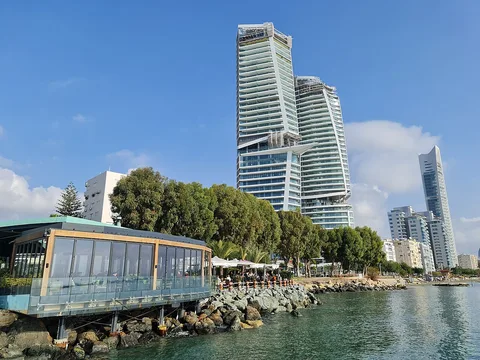
A medieval old town, a superyacht marina and the Troodos wine villages on the doorstep.
Explore LimassolPhoto by Στέφανος Νικολάου on Wikimedia Commons, CC BY-SA 4.0 (https://commons.wikimedia.org/wiki/File:Skyscrapers_in_Limassol.jpg)

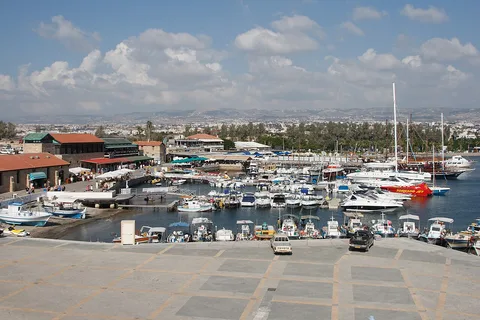
Roman mosaics, the rock where Aphrodite was born, and the Akamas wilderness on the doorstep.
Explore Paphos RegionPhoto by Dmitry Panov on Wikimedia Commons, CC BY 3.0 (https://commons.wikimedia.org/wiki/File:Paphos_Marine,_Cyprus_-_panoramio.jpg)
Paphos and Larnaca are separate arrival airports, and transfers can be lengthy when crossing the south coast. A hotel described as a Limassol holiday may use Paphos Airport; check the full journey and whether transfers are included.
Summer is hot and dry, making early starts useful for historic sites and walks. Spring and autumn can suit touring, while winter coastal stays have a quieter atmosphere and some seasonal facilities may close.
The island is divided, with different practical arrangements when crossing between areas. Read current FCDO guidance before planning a crossing, and check car-hire and insurance conditions rather than assuming they apply everywhere.
A Cyprus holiday can follow quite different paths depending on where you stay. Paphos brings archaeology into a coastal setting, with mosaic floors from ancient villas and a harbour watched over by a medieval castle. Larnaca offers another way to combine a seafront walk with history: its castle stands at the end of the Foinikoudes promenade and houses a small museum.
Inland, Troodos changes the focus to forested slopes, orchards and villages where winemaking and traditional crafts remain part of the regional character. Byzantine churches add another reason to explore, with painted interiors that reward a closer look. Lefkara is known for lace embroidery and filigree silver. Its narrow streets, traditional houses and crafts museum give you several ways to explore that heritage. Kourion, west of Limassol, puts an ancient theatre at the centre of an archaeological visit. Back at the table, meze introduces Cypriot cooking through a selection of small dishes.
Cyprus has one of the longest seasons in the Mediterranean:
April to May: Lovely spring weather, 22-28°C. Wildflowers carpet the hillsides. Resorts are quiet and prices are low. Perfect for walking, sightseeing and golf.
June to September: Peak season. Temperatures hit 32-40°C on the coast with no rain at all. The sea is warm (25-28°C) from June onwards. July and August can be very hot.
October to November: The secret season. Still 24-28°C in October, the sea is at its warmest, and prices drop sharply. November cools a little but can still be beach weather.
December to March: Mild on the coast (15-18°C) with some rain. The Troodos Mountains get snow in January and February. Cyprus works as a winter sun escape, though it is cooler than you might expect.
Destination photographs, not photographs of a specific holiday deal. Images resized for display.
Long-term modelled averages for Paphos, not a forecast or an average for all of Cyprus. Local conditions, elevation and coastlines can differ from the approximately 0.5° × 0.625° model grid. Precipitation includes rain and the water equivalent of snow. TripBuster calculated mean daily highs and mean monthly precipitation totals from NASA Langley Research Center’s POWER project (Daily API v2.10.0, MERRA-2; accessed 12 October 2026).
| Month | Daytime high (°C) | Precipitation (mm) |
|---|---|---|
| Jan | 13.5 | 79.4 |
| Feb | 14 | 52 |
| Mar | 16.4 | 34.6 |
| Apr | 19.9 | 19.2 |
| May | 24.2 | 13.3 |
| Jun | 28.5 | 4.7 |
| Jul | 31.4 | 2.4 |
| Aug | 31.5 | 2.7 |
| Sep | 28.8 | 8.9 |
| Oct | 25 | 26.1 |
| Nov | 19.9 | 50.6 |
| Dec | 15.5 | 88 |
Source: NASA POWER / MERRA-2 (opens in a new tab), Paphos (modelled reference), 1991–2020.
Cyprus has two international airports:
Paphos (PFO): 4 hours 30 minutes from London. Serves the western coast including Paphos, Coral Bay and Polis. Direct flights from Gatwick, Luton, Stansted, Manchester, Birmingham, Bristol, Edinburgh, East Midlands, Leeds Bradford and Newcastle with easyJet, Jet2, TUI, Ryanair and British Airways.
Larnaca (LCA): 4 hours 40 minutes from London. Serves the eastern coast including Ayia Napa, Protaras, Limassol and Nicosia. Direct flights from Heathrow, Gatwick, Luton, Stansted and Manchester with BA, easyJet, Jet2, TUI, Wizz Air and Cyprus Airways.
The two airports are about 1.5 hours apart by road. Charter flights run from most major UK airports from April to October.
Meze is a good introduction to Cypriot cooking if you enjoy trying several small dishes. The selection varies between tavernas and may include dips, olives, vegetables and cheese before meat or fish dishes. Ask what is included so you can choose a meal that suits your appetite and tastes.
Halloumi is worth trying grilled or fried, but it is also eaten cold with bread, olives or watermelon. In the Paphos region, look for koupepia, stuffed vine leaves, and trachanas, a soup made from a dried wheat and sour-milk mixture. Geroskipou's loukoumia offer a sweet finish. Local wine gives another connection to the island's agricultural traditions, especially in the Paphos and Troodos winemaking areas.
Currency: Euro (€). UK cards widely accepted everywhere.
Language: Greek. English is spoken almost universally in tourist areas and very widely across the island.
Time zone: GMT+2 (2 hours ahead of the UK, 1 hour ahead during BST).
Visa and entry: see Visa Advisory above.
Plug type: Type G (UK three-pin). No adaptor needed for British travellers.
Tap water: Safe to drink, though many people prefer bottled water for taste.
Driving: Left-hand side, same as the UK.
Emergency number: 112 or 199.
GHIC: valid for emergency state-provided medical treatment in public facilities. Travel insurance still recommended. Medical facilities are good, particularly in the main towns.
Ten Byzantine and post-Byzantine churches scattered across mountain villages, inscribed by UNESCO in 1985. Frescoes from the 11th to 16th centuries survive under steep wooden roofs that protected them from snow and rain.
UNESCO listed since 1980. Roman villa floors with mythological mosaics among the finest in the eastern Mediterranean, plus the Tombs of the Kings carved straight into the bedrock north of town.
The mythological birthplace of Aphrodite, where a sea-stack rises from a pebble beach on the coast road between Paphos and Limassol. Legend says swimming around it brings eternal youth.
Halloumi was invented here and tastes nothing like the supermarket version. A traditional meze runs to twenty small dishes including loukaniko sausage, sheftalia, octopus in red wine and mountain village kleftiko.
The world's oldest named wine still in production, made from sun-dried Xynisteri and Mavro grapes in fourteen Troodos villages. The name dates to the 12th-century Crusader Knights who controlled the region.
The protected national park between Ayia Napa and Protaras has limestone sea caves, a natural rock bridge and water so clear that the sandy seabed glows turquoise from the cliff path above.
Not required
UK passport holders can visit Cyprus visa-free for stays up to 90 days within any 180-day period for tourism or business. Cyprus is in the EU but not yet in the Schengen Area (full Schengen accession is targeted for 2026, subject to EU Council approval). The EU Entry/Exit System (EES) does not currently apply at Cypriot borders, but ETIAS will apply from Q4 2026 (Cyprus is one of 30 ETIAS countries) — €20, free for under 18s and over 70s, valid up to 3 years. Time spent in Cyprus is calculated separately from the Schengen 90/180 limit. Passport must be valid for at least 3 months beyond planned departure. Effective May 2026 — check gov.uk/foreign-travel-advice/cyprus for current rules before booking.
No vaccinations required. Be up to date with routine UK vaccinations including tetanus. UK GHIC card valid for emergency state-provided medical treatment in government hospitals. Tap water is safe but mineralised — bottled water widely used. Healthcare in the south is good (Larnaca and Nicosia general hospitals). Heat is intense in summer (Jul-Aug 35°C+) — sun protection and hydration essential. The north (TRNC) is not recognised by the UK and healthcare is more basic; private clinics preferred. Standard travel insurance recommended. Effective May 2026 — check fitfortravel.nhs.uk for any updates before travel.
Entry and health requirements can change. Check current official travel advice (opens in a new tab) for your passport and circumstances.
Confirm dates and arrangements before making travel plans.
Cyprus's biggest carnival runs for ten days before Lent with masked balls, children's parades and a Grand Carnival Parade through Limassol with floats, dancers and music.
The most important festival of the year. Midnight church services on Holy Saturday, red-dyed eggs, spit-roasted lamb on Easter Sunday and fireworks in every village.
Ten days of wine tasting, folk dancing and traditional Cypriot food in the Municipal Gardens, celebrating the island's wine heritage with free pours from local producers.