River Gambia Mangroves
The River Gambia winds 1,100 kilometres inland through mangrove creeks, with boat trips from the coast passing kingfishers, African fish eagles, 560 recorded bird species and resident hippo pools.
Atlantic beaches, river scenery and birdwatching
The Gambia follows the course of the River Gambia on West Africa’s Atlantic coast. Coastal hotels around Kololi and Kotu are popular bases for beach holidays and trips inland.
Average daytime highs · °C
Banjul (modelled reference) · 1991–2020
There are no current The Gambia deals on TripBuster. An independent travel expert can help you explore dates, hotels and a budget that works for you.
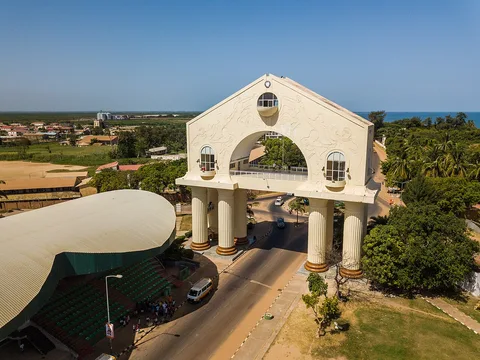
West Africa's most accessible beach destination with 560 bird species and genuine Gambian warmth
Explore Atlantic Coast & BanjulPhoto by Hannu Sääskilahti on Wikimedia Commons, CC BY-SA 4.0 (https://commons.wikimedia.org/wiki/File:Gambia,_Banjul,_Arch_22.jpg)
Birdwatching, river excursions and visits to local markets can complement time by the sea. Check the location of your hotel, the travel season and which excursions are included, rather than assuming every coastal stay offers the same activities.
The River Gambia is a thread running through the country’s history. Kunta Kinteh Island and related places at Albreda and Juffureh preserve evidence of the trade in enslaved people and its abolition. Approach a visit as a chance to understand that history, giving the remains and their interpretation time and attention.
In Banjul, the National Museum introduces Gambian material culture and history. Further inland, Wassu’s laterite stone circles and associated burial mounds tell a different story, with a site museum to help put the monuments in context.
Nature adds another reason to leave the coast’s holiday routine. Abuko has evergreen forest around pools, while Tanji River Bird Reserve brings together an estuary, mangroves and coastal woodland. These contrasting habitats make birdwatching a useful focus for your visit. Check current road and river-travel advice before heading inland: heavy rain can disrupt routes and some boats lack suitable safety equipment. Plan around the places you most want to understand.
November to May is the dry season and the time to visit. Temperatures run 25-35°C with virtually zero rainfall and blue skies every day. December to February is peak season at 25-30°C, the most comfortable months. March to May gets hotter (32-35°C). June to October is the rainy season with heavy afternoon downpours, high humidity and some hotel closures. The birding is actually best at the start of the dry season (November-December) when migratory species arrive.
Explore Abuko Nature Reserve: Look for birds around the forest and pools, allowing time to watch quietly.
Visit Tanji River Bird Reserve: Discover the contrast between estuary, mangroves and coastal woodland without expecting a fixed list of sightings.
Learn at the National Museum: Use the collections in Banjul as an introduction to Gambian history and material culture.
Consider a Kunta Kinteh heritage visit: Learn about the trade in enslaved people at the island and related mainland sites. Check current river-travel advice and boat safety arrangements.
Destination photographs, not photographs of a specific holiday deal. Images resized for display.
Long-term modelled averages for Banjul, not a forecast or an average for all of The Gambia. Local conditions, elevation and coastlines can differ from the approximately 0.5° × 0.625° model grid. Precipitation includes rain and the water equivalent of snow. TripBuster calculated mean daily highs and mean monthly precipitation totals from NASA Langley Research Center’s POWER project (Daily API v2.10.0, MERRA-2; accessed 12 October 2026).
| Month | Daytime high (°C) | Precipitation (mm) |
|---|---|---|
| Jan | 27.5 | 3 |
| Feb | 28.1 | 2.2 |
| Mar | 28.5 | 11.4 |
| Apr | 27.5 | 2.7 |
| May | 27.4 | 2.4 |
| Jun | 28.3 | 44.7 |
| Jul | 28.3 | 168.1 |
| Aug | 28.1 | 281.2 |
| Sep | 28.5 | 209.4 |
| Oct | 29.5 | 69.5 |
| Nov | 30.1 | 5.3 |
| Dec | 28.4 | 2.6 |
Source: NASA POWER / MERRA-2 (opens in a new tab), Banjul (modelled reference), 1991–2020.
See the stone circles at Wassu: Look closely at the laterite pillars and visit the site museum for context.
Direct charter flights from London Gatwick (TUI, Jet2) and Manchester take approximately 6 hours to Banjul International Airport. Flight frequency increases November to April (peak season). The airport is 25km from the main resort areas on the Atlantic coast. Transfers to Kololi, Kotu and Senegambia take 30-45 minutes depending on traffic. Some hotels offer airport pickup. Taxis from the airport cost around 1,500-2,000 GMD (£18-25).
Domoda centres on a peanut sauce, with vegetables and meat or fish giving the dish substance. Yassa takes a tangier direction: chicken or fish is paired with a citrus sauce that includes onion, garlic and mustard.
Benachin is cooked in one pot and can include fish or meat alongside vegetables. These are useful names to look for on a Gambian menu; ask how the kitchen prepares them, as recipes vary.
Currency: Gambian dalasi (GMD). £1 = approximately 80-90 GMD. Euros and pounds are widely accepted at hotels and tourist areas. Language: English (official), plus Mandinka, Wolof and Fula widely spoken. Time zone: GMT (same as UK in winter, 1 hour behind in BST). Visa and entry: see Visa Advisory above. Plug type: UK three-pin (Type G). Tap water: drink bottled water. Emergency number: 116 (police). GHIC: not valid, travel insurance essential. Malaria: present year-round, antimalarials recommended.
The River Gambia winds 1,100 kilometres inland through mangrove creeks, with boat trips from the coast passing kingfishers, African fish eagles, 560 recorded bird species and resident hippo pools.
The sacred pool at Bakau has been a fertility shrine for over 500 years, with around 80 Nile crocodiles you are encouraged to touch, watched over by local guides. Surreal and safe.
The Atlantic coast from Bakau to Sanyang has kilometres of golden sand with wooden beach-bar chiringuitos serving grilled fish, Julbrew beer and live Gambian drumming until sunset.
The compact 105-hectare reserve south of the capital protects gallery forest with red colobus and green vervet monkeys, crocodiles in the Bamba pool, and some of West Africa's best birdwatching.
The covered bazaar in the small capital sells indigo-dyed fabrics, masks, kola nuts, spices and traditional medicines along narrow lanes that remain the social centre of Banjul.
The UNESCO-listed river island, formerly James Island, held the Royal African Company's slave fort from 1651. Boat trips from Albreda run to the fort ruins and baobab-covered grounds.
Not required
UK passport holders can visit The Gambia visa-free for stays up to 90 days. Passport must be valid for at least 6 months from arrival. Yellow fever certificate required for entry. Proof of onward travel and accommodation may be requested. A tourism levy (currently £7, paid into ticket price) applies. Effective May 2026 — check gov.uk/foreign-travel-advice/the-gambia for current rules before booking.
Yellow fever certificate required for entry. Be up to date with routine UK vaccinations including tetanus; hepatitis A and typhoid recommended. Malaria risk year-round throughout the country — antimalarial prophylaxis essential (consult travel clinic). Use DEET-based mosquito repellent and sleep under nets. Tap water is not safe — drink only bottled or boiled water. Healthcare is very limited — the Royal Victoria Hospital in Banjul is the main public facility but serious cases require evacuation to Senegal or Europe. Strong sun and humidity year-round — sun protection and hydration essential. Comprehensive travel insurance with full medical and evacuation cover essential. Effective May 2026 — check fitfortravel.nhs.uk for any updates before travel.
Entry and health requirements can change. Check current official travel advice (opens in a new tab) for your passport and circumstances.
Confirm dates and arrangements before making travel plans.
The 18 February celebrations of Gambian independence from Britain in 1965 are marked with a national parade at the Independence Stadium in Bakau, cultural performances and flag-raising nationwide.
Biennial two-week heritage festival at Kunta Kinteh Island and Juffureh honouring the diaspora's return, with drumming, wrestling matches, village tours and a candle-lit vigil by the river.
Eid al-Fitr, marking the end of Ramadan, is the year's biggest celebration in The Gambia, with family gatherings, new outfits, beach prayers and afra grilled meat shared across compounds.