Taj Mahal at Sunrise
The white-marble mausoleum Shah Jahan built for his wife Mumtaz Mahal in 1653 is at its most beautiful at sunrise, when the stone glows pink and the crowds haven't arrived.
Palaces, historic cities and varied landscapes
India offers journeys through historic cities, rural landscapes and a wide range of regional cultures. Delhi, Agra and Jaipur form the popular Golden Triangle, while Kerala and Goa offer a different pace in the south and on the coast.
Average daytime highs · °C
New Delhi (modelled reference) · 1991–2020
There are no current India deals on TripBuster. An independent travel expert can help you explore dates, hotels and a budget that works for you.
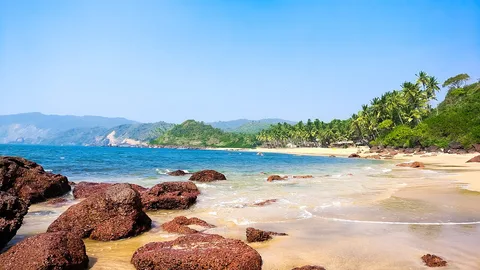
100km of Arabian Sea beaches with Portuguese churches, beach shacks and India's most unexpected seafood culture
Explore GoaPhoto by Sam 8393 on Wikimedia Commons, CC BY-SA 4.0 (https://commons.wikimedia.org/wiki/File:BeachFun.jpg)
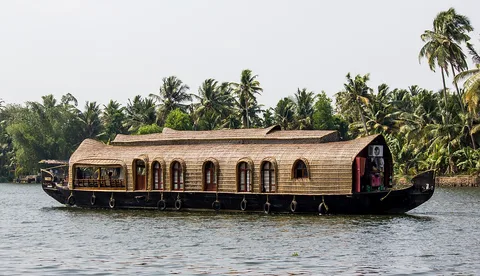
A houseboat through coconut canals, tea plantations cascading down hillsides and Ayurveda older than empires.
Explore KeralaPhoto by Saad Faruque on Wikimedia Commons, CC BY-SA 2.0 (https://commons.wikimedia.org/wiki/File:Boathouse_%287063399547%29.jpg)
India's relentless, magnificent maximum city where every street is a story
Explore Mumbai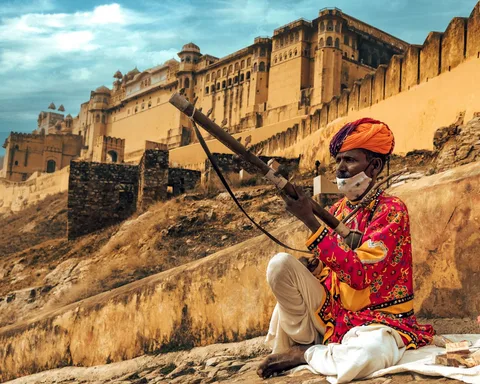
The Taj Mahal at sunrise, palace hotels and India's most beautiful state
Itineraries can combine guided sightseeing, rail travel, wildlife areas and time beside the sea. Distances are substantial and weather varies strongly by region, so choose a route and season together rather than planning from a single national forecast.
Choose a few places to explore in depth. In Delhi, Humayun’s Tomb brings red sandstone and marble into a garden divided by water channels. Agra adds the Taj Mahal, the white-marble mausoleum Shah Jahan commissioned in memory of Mumtaz Mahal. Look beyond its outline to the carved relief and stone inlay, then compare it with the red-sandstone walls, palaces and audience halls of Agra Fort.
Jaipur offers another way to read a city through its buildings. Broad streets meet at public squares, with orderly bazaar frontages and craft streets among the palaces and temples. Make time for the street plan as well as individual monuments.
For a separate focus, consider Alappuzha in Kerala. Its backwater houseboats grew from cargo craft once used for rice and spices. Check the operator’s safety equipment and current conditions before booking. Before finalising any route, read current regional travel advice, follow local weather updates and avoid demonstrations and large gatherings.
India's climate varies enormously by region. Rajasthan is best October to March (cool, dry, 15-28C; summers are brutally hot, 40C+). Kerala is best September to March (the monsoon runs June to August). Goa is best November to March (hot and dry, 28-33C; the monsoon runs June to September and most beach shacks close). The Taj Mahal is best at sunrise in winter (October to February, clear skies, cooler temperatures).
Visit Humayun’s Tomb: Explore the relationship between Delhi’s Mughal garden layout, water channels and sandstone-and-marble architecture.
Look closely at the Taj Mahal: Give its garden setting, carved marble and stone inlay attention alongside the familiar overall view.
Explore Agra Fort: Compare the fortress walls with the palaces and audience halls within the Mughal complex.
Walk Jaipur’s planned streets: Notice the public squares, matching bazaar frontages and craft streets of the walled city.
Destination photographs, not photographs of a specific holiday deal. Images resized for display.
Long-term modelled averages for New Delhi, not a forecast or an average for all of India. Local conditions, elevation and coastlines can differ from the approximately 0.5° × 0.625° model grid. Precipitation includes rain and the water equivalent of snow. TripBuster calculated mean daily highs and mean monthly precipitation totals from NASA Langley Research Center’s POWER project (Daily API v2.10.0, MERRA-2; accessed 12 October 2026).
| Month | Daytime high (°C) | Precipitation (mm) |
|---|---|---|
| Jan | 22.7 | 17.2 |
| Feb | 26.6 | 21.9 |
| Mar | 32.9 | 15.3 |
| Apr | 39.2 | 12.2 |
| May | 43 | 27.7 |
| Jun | 42.2 | 83.7 |
| Jul | 37.2 | 202.2 |
| Aug | 34.1 | 212 |
| Sep | 33.7 | 119.3 |
| Oct | 32.9 | 14.9 |
| Nov | 28.8 | 4.3 |
| Dec | 24.3 | 7.8 |
Source: NASA POWER / MERRA-2 (opens in a new tab), New Delhi (modelled reference), 1991–2020.
Photo by Mayur Sable on Unsplash (https://unsplash.com/photos/a-man-sitting-on-a-rock-with-a-stick-in-his-hand-tTtHVNR5pt0)
Consider a Kerala houseboat trip: Use Alappuzha as a starting point for researching the backwaters, checking safety equipment and current conditions with the operator.
Indira Gandhi International Airport (DEL), Delhi: 8 hours from London. Direct with BA, Air India, Vistara, Virgin Atlantic. The gateway for Rajasthan and the Golden Triangle. 45 min from central Delhi (traffic-dependent).
Chhatrapati Shivaji International Airport (BOM), Mumbai: 9 hours from London. Direct with BA, Air India, Virgin Atlantic. The gateway for Goa (1 hr domestic flight).
Cochin International Airport (COK), Kochi: the gateway for Kerala. Domestic from Delhi (3 hrs) and Mumbai (2 hrs). Some direct flights from the Gulf.
Goa Airport (GOI), Dabolim/Mopa: domestic from Delhi (2.5 hrs) and Mumbai (1 hr). Some direct UK charter flights in winter season.
Let the places on your route shape what you order. In Rajasthan, dal bati churma brings together lentils, wheat bread balls and a sweet cereal crumble. Ghee and garlic chutney are accompaniments to look for.
In Kerala, fish moilee uses a coconut-milk gravy and can be served with rice or appam. Puttu, a cylindrical steamed rice cake, is another option at breakfast. Ask what comes with each dish so you can choose a meal around the flavours and ingredients you enjoy.
Currency: Indian Rupee (INR). UK cards accepted in hotels and upmarket restaurants. Cash essential for street food, auto-rickshaws, markets and smaller establishments.
Language: Hindi and English (official). English widely spoken in tourist areas, hotels and by the educated middle class.
Time zone: GMT+5:30.
Visa and entry: see Visa Advisory above.
Plug type: Type C, D and M (varies). Bring a universal adaptor.
Water: Do not drink tap water. Bottled water everywhere.
Tipping: 10% at restaurants. Tips for drivers, guides and hotel staff expected and appreciated.
Driving: Do not self-drive (Indian traffic is among the most challenging in the world). Hire a car with driver (cheap and the standard way to travel).
Health: No mandatory vaccinations for UK visitors but hepatitis A, typhoid and routine vaccinations recommended.
Emergency number: 112.
The white-marble mausoleum Shah Jahan built for his wife Mumtaz Mahal in 1653 is at its most beautiful at sunrise, when the stone glows pink and the crowds haven't arrived.
Udaipur's Lake Palace floats on Lake Pichola, Jaipur's Rambagh Palace is the former royal residence and Jodhpur's Umaid Bhawan is still home to the Maharaja. Conversions are exquisite.
A houseboat cruise through the palm-fringed canals, lagoons and rice paddies of Alleppey and Kumarakom, with curry cooked on board and egrets picking through the water at dusk.
The Hawa Mahal's 953 lattice windows, the Amber Fort on its hilltop and the City Palace in the heart of the old town, all washed in the distinctive terracotta pink since 1876.
Sunset and a night in the dunes outside Jaisalmer, with Rajput music by firelight, a Rajasthani thali cooked on the sand, and stars that go on forever above the golden desert.
Walking Chandni Chowk at dusk for paratha at Parathe Wali Galli, chaat at Bishan Swaroop, and the most intense parathas, chaat and kebabs in India.
eVisa required
UK passport holders need a tourist eVisa for India. Apply online at indianvisaonline.gov.in (cost approx US$25 for a 30-day double-entry tourist eVisa, US$40 for 1-year multiple-entry, US$80 for 5-year multiple-entry; allow at least 4 working days for processing). Passport must be valid for at least 6 months from arrival with at least 2 blank pages. The eVisa is valid for entry at 28 designated airports and 5 seaports — not all land border crossings. Yellow fever certificate required if arriving from a country listed as a transmission risk. Effective May 2026 — check gov.uk/foreign-travel-advice/india for current rules before booking.
No mandatory vaccinations. Be up to date with routine UK vaccinations including tetanus; hepatitis A and typhoid recommended; rabies considered for rural/long stays; Japanese encephalitis considered for some itineraries. Malaria risk in many regions (very low for typical Delhi/Agra/Jaipur/Goa/Kerala itineraries; higher in northeast and forested rural areas) — check current TravelHealthPro guidance for your itinerary. Dengue, chikungunya and Zika present year-round, particularly Sep-Nov. Tap water is not safe — drink only bottled or boiled water. Healthcare in Delhi, Mumbai, Bangalore, Chennai is excellent in private hospitals (Apollo, Fortis, Max); remote areas basic. Strong sun and intense heat in summer (Apr-Jun 40°C+ in north). Air pollution in Delhi can be severe Oct-Feb. Comprehensive travel insurance with full medical and evacuation cover essential. Effective May 2026 — check fitfortravel.nhs.uk for any updates before travel.
Entry and health requirements can change. Check current official travel advice (opens in a new tab) for your passport and circumstances.
Confirm dates and arrangements before making travel plans.
The festival of lights is India's biggest celebration, with oil lamps, fireworks, rangoli patterns and family feasts across five days. Rajasthan is particularly spectacular.
The Hindu festival of colour where everyone throws coloured powder and water at everyone else in a joyful chaos, particularly around Vrindavan, Mathura and Jaipur.
One of the largest livestock fairs on earth, with 50,000 camels, Rajput horse shows, turban-tying competitions and folk music over a week in the desert town.