MLA
Malta International Airport
A gateway to consider
The main air gateway to Malta. Stays on Gozo need an onward road and sea connection.
- Confirm the airport on your flight booking
- Check whether hotel or port transfers are included
Harbour cities, island history and coastal stays.
Malta combines compact historic cities with coastal resort areas and ferry trips to neighbouring Gozo. Valletta and the Three Cities suit architecture and harbour walks, while Sliema, St Julian’s and the St Paul’s Bay area offer different bases for a hotel holiday. Sandy beaches are concentrated in particular parts of the islands.
A gateway to consider
The main air gateway to Malta. Stays on Gozo need an onward road and sea connection.
Average daytime highs · °C
Valletta (modelled reference) · 1991–2020
Malta combines compact historic cities with coastal resort areas and ferry trips to neighbouring Gozo.
There are no current Malta deals on TripBuster. An independent travel expert can help you explore dates, hotels and a budget that works for you.
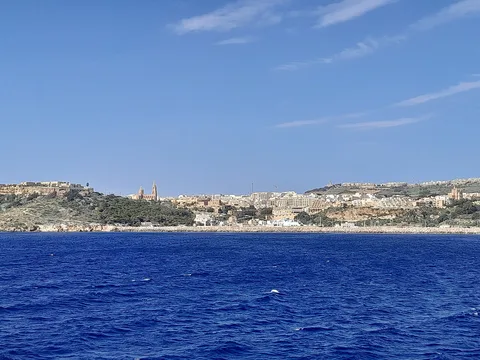
Malta's quieter, greener sister island with prehistoric temples older than the pyramids
Explore GozoPhoto by August Dominus on Wikimedia Commons, CC0 (https://commons.wikimedia.org/wiki/File:Otok_Gozo_2025.jpg)
Explore holidays and deals in Sliema, St Julian's & the North.
Explore Sliema, St Julian's & the North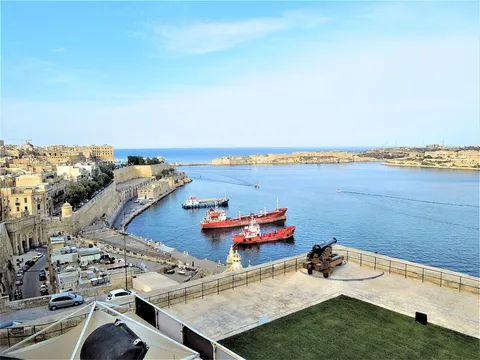
A walled UNESCO capital built by the Knights of St John, with two Caravaggios and a harbour view from every street.
Explore Valletta & the HarbourPhoto by Cosal on Wikimedia Commons, CC BY-SA 4.0 (https://commons.wikimedia.org/wiki/File:Valletta,_Grand_Harbour,_view_East_from_Salute_Battery.jpg)
Check the immediate setting of your hotel: a seafront address may face a rocky shoreline rather than a sandy beach. Mellieha is useful for northern beaches, while urban bases can be convenient for dining and public transport.
Buses connect many visitor areas, although journeys can take longer than the short distances suggest. Allow time for ferries when combining Malta and Gozo, and check the final return sailing before a day trip.
Summer is hot and busy; spring and autumn can suit walking and heritage visits. Coastal conditions affect boat excursions throughout the year. Ask about steps, gradients and lift access if staying in an older building.
Malta suits a holiday with history at its centre, but the places you visit offer quite different experiences. Valletta is a planned capital on a peninsula between harbours, with bastions and a grid of streets shaped by the Knights of St John. Its churches and palaces give the city much of its architectural character. Inside St John's Co-Cathedral, artworks include two paintings by Caravaggio.
Mdina offers another view of the island's past. Its gates and squares bring medieval defences together with later Baroque buildings, including the cathedral overlooking St Paul's Square. For something much older, the prehistoric temple complexes of Ħaġar Qim and Mnajdra shift attention from city streets to the construction of large stone monuments.
Gozo has its own fortified Citadel, with the Cathedral of the Assumption, as well as the prehistoric temples of Ġgantija.
Malta is a year-round destination with one of the best climates in Europe:
April to June: Ideal. 20-28C, sunny, wildflowers in bloom, warm enough to swim from May. Festa (village saint) season begins.
July to August: Hot and dry (32-38C). The sea is at its warmest. Very busy. This is peak season for beach and nightlife visitors.
September to November: Arguably the best time. Still warm (24-30C in September, 18-22C in November), the sea stays swimmable until late October, crowds thin and prices drop.
December to March: Mild (12-18C) with occasional rain. Quieter and cheaper. Excellent for culture, walking and exploring without the heat. Not warm enough for comfortable beach days.
Destination photographs, not photographs of a specific holiday deal. Images resized for display.
Long-term modelled averages for Valletta, not a forecast or an average for all of Malta. Local conditions, elevation and coastlines can differ from the approximately 0.5° × 0.625° model grid. Precipitation includes rain and the water equivalent of snow. TripBuster calculated mean daily highs and mean monthly precipitation totals from NASA Langley Research Center’s POWER project (Daily API v2.10.0, MERRA-2; accessed 12 October 2026).
| Month | Daytime high (°C) | Precipitation (mm) |
|---|---|---|
| Jan | 15.2 | 74.3 |
| Feb | 14.7 | 60.2 |
| Mar | 15.3 | 46.9 |
| Apr | 16.7 | 31.5 |
| May | 19.5 | 16.3 |
| Jun | 23.4 | 9.6 |
| Jul | 26.3 | 4.2 |
| Aug | 27.5 | 11.1 |
| Sep | 25.6 | 60 |
| Oct | 23.3 | 79 |
| Nov | 20.2 | 90.6 |
| Dec | 16.9 | 85.3 |
Source: NASA POWER / MERRA-2 (opens in a new tab), Valletta (modelled reference), 1991–2020.
Fly into Malta International Airport (MLA), about 3 hours 15 minutes from London. Year-round direct flights from Gatwick, Stansted, Luton and Heathrow with Ryanair, easyJet, Air Malta (now merged with Ryanair Malta Air) and BA. Seasonal services from Manchester, Birmingham, Bristol, Edinburgh, Glasgow, Newcastle, East Midlands and Leeds Bradford with Jet2, Ryanair and easyJet.
The airport is in the centre of the island, about 20 minutes from Valletta and 30 minutes from Sliema/St Julian's by bus or taxi.
Gozo is reached by a 25-minute ferry from Cirkewwa in the north of Malta to Mgarr harbour on Gozo. Ferries run frequently (every 45 minutes, more often in summer). A fast ferry service also runs from Valletta to Gozo (about 45 minutes).
Maltese cooking draws on Mediterranean influences, with bread, olive oil and local produce featuring alongside meat and fish. Pastizzi, small savoury pastries, are one snack to look for between visits.
For a fuller meal, try rabbit stew, cooked with vegetables, tomato and wine, or minestra, a vegetable soup that can include beans and small pasta. Bigilla is a dried-bean dip with garlic, parsley and olive oil, eaten with Maltese bread or water biscuits. Bread and a bowl of bigilla make a simple addition to a meal, alongside the more substantial soups and stews.
Currency: Euro (€). UK cards widely accepted. Cash useful for smaller vendors, buses and pastizzi shops.
Language: Maltese and English are both official languages. English is spoken virtually everywhere.
Time zone: GMT+1 (same as mainland Europe).
Visa and entry: see Visa Advisory above.
Plug type: Type G (same as the UK). No adaptor needed.
Tap water: Safe to drink but tastes of chlorine. Most locals drink bottled water.
Emergency number: 112.
Driving: Drives on the left (same as the UK). Roads are narrow, driving can be chaotic, and parking in Valletta and Sliema is difficult. Buses and ferries are good alternatives.
GHIC: valid for emergency state-provided medical treatment in public facilities. Travel insurance still recommended.
The UNESCO capital built by the Knights of St John in the 16th century, with honey-coloured limestone streets, St John's Co-Cathedral's Caravaggio paintings and panoramic Grand Harbour views.
A sheltered cove between Malta and Gozo with water so clear you can see your shadow on the white sand five metres below. Best reached by boat early in the morning before the crowds.
Hagar Qim, Mnajdra and the Hypogeum predate the pyramids of Giza and Stonehenge. Among the oldest free-standing stone structures on earth, built by a still-mysterious neolithic civilisation.
The medieval walled hilltop city, Malta's former capital, with narrow alleys of noble palazzi and almost no traffic. Most atmospheric at dusk when the day-trippers have left.
Twenty-five minutes from Cirkewwa to Mgarr on Malta's greener, quieter sister island, with the Ggantija Temples, the Citadel at Victoria and the coastal walk at Xlendi waiting on the other side.
The diamond-shaped flaky pastries filled with ricotta or mushy peas cost around fifty cents and define Maltese food culture. Crystal Palace in Rabat is the legend.
Not required
UK passport holders can visit Malta visa-free under Schengen rules: up to 90 days within any 180-day period for tourism or business. Passport must be valid for at least 3 months beyond planned departure and issued within the last 10 years. The EU Entry/Exit System (EES) has been in operation since 10 April 2026 — expect biometric registration on first entry. From Q4 2026 (October to December), UK travellers will also need to apply for an ETIAS travel authorisation in advance (€20, free for under 18s and over 70s), valid for up to 3 years. Effective May 2026 — check gov.uk/foreign-travel-advice/malta for current rules before booking.
No vaccinations required. Be up to date with routine UK vaccinations including tetanus. UK GHIC card valid for emergency state-provided medical treatment. Tap water is safe but heavily mineralised and not to everyone's taste — bottled water widely used. Healthcare is excellent (Mater Dei Hospital is the main public facility). English is an official language so communication with medical staff is straightforward. Strong sun in summer (Jul-Aug 30°C+) — sun protection essential. Standard travel insurance recommended. Effective May 2026 — check fitfortravel.nhs.uk for any updates before travel.
Entry and health requirements can change. Check current official travel advice (opens in a new tab) for your passport and circumstances.
Confirm dates and arrangements before making travel plans.
Every village takes a weekend in summer to celebrate its patron saint with marching bands, fireworks competitions, processions and church illuminations that turn the whole island festive.
Five days of costumed parades, satirical floats, street parties and defilata dance competitions in Valletta and on Gozo, dating back to the days of the Knights of St John.
Life-sized statues depicting scenes from the Passion are carried through the streets of every Maltese town in hooded processions dating back several centuries.