Get to know Mauritius
The west coast’s beaches are one part of Mauritius. Inland, Black River Gorges National Park opens into forested hills, river valleys and waterfalls. Walking trails and the viewpoint at Alexandra Falls give you different ways to explore that landscape.
Port Louis, the capital, brings a change of scene. Its market is filled with fruit, vegetables and food stalls, with Chinatown nearby. Dholl puri and a creamy alouda drink are among the local specialities to look for.
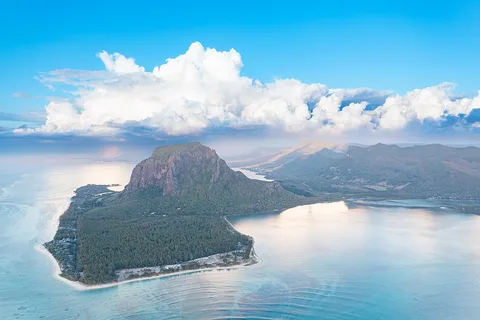
Two heritage sites tell difficult, important chapters of the island’s past. Le Morne, in the south-west, became a refuge for people escaping enslavement. Aapravasi Ghat preserves part of the Port Louis immigration depot through which indentured labourers arrived to work on plantations. At Pamplemousses, L’Aventure du Sucre occupies a historic sugar factory, tracing the industry that shaped so much of Mauritian history.
When to visit
Mauritius has a tropical climate year-round. The best months are May to November (the Mauritian winter): 20-26C, dry, less humid and the most comfortable for exploring. December to April is summer: 27-33C, more humid, with occasional tropical showers and cyclone risk (January to March). The lagoon water is warm year-round (23-28C). The south-west coast can be windier than the north and east, which suits kitesurfers at Le Morne.
Things to see and do
Explore Black River Gorges: Follow a forest trail suited to your plans and check the current route conditions. Alexandra Falls viewpoint offers another perspective on the park.
Browse Port Louis Market: Look around the produce stalls and try a local snack, then explore neighbouring Chinatown.
Visit Aapravasi Ghat: Learn about the indentured labourers who passed through this immigration depot and the migration that shaped Mauritius.
Understand Le Morne’s history: See the south-western mountain landscape as a place of remembrance for people who resisted slavery.
Explore L’Aventure du Sucre: The historic factory in Pamplemousses explains sugar production and its place in the island’s history.