Sultan Qaboos Grand Mosque
The main mosque of Muscat has the world's second-largest hand-woven Persian carpet and a central Swarovski chandelier eight metres tall. Open to non-Muslim visitors outside prayer times.
Wadi pools, fjord-like inlets and the most genuinely hospitable corner of the Gulf.
Oman’s forts and irrigation channels reveal how people defended settlements and shared water. Muscat’s National Museum and Nizwa’s craft stalls offer different starting points for exploring that heritage.
Monthly guide averages and suggested seasons. These are not a weather forecast; conditions vary within a destination.
| Month | Average high (°C) | Rainfall (mm) | Season |
|---|---|---|---|
| Jan | 26 | 25 | Recommended |
| Feb | 27 | 20 | Recommended |
| Mar | 30 | 15 | Recommended |
| Apr | 34 | 10 | Shoulder season |
| May | 38 | 5 | Low season |
| Jun | 39 | 0 | Low season |
| Jul | 37 | 0 | Low season |
| Aug | 36 | 0 | Low season |
| Sep | 35 | 0 | Low season |
| Oct | 33 | 5 | Shoulder season |
| Nov | 29 | 15 | Recommended |
| Dec | 27 | 20 | Recommended |
There are no current Oman deals on TripBuster. An independent travel expert can help you explore dates, hotels and a budget that works for you.
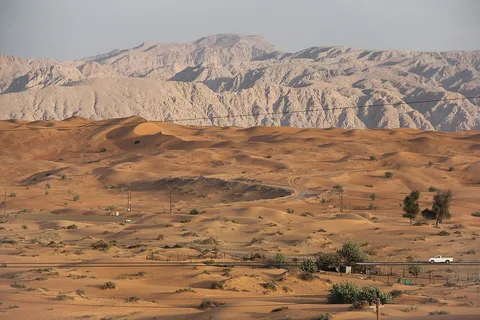
Arabia's most dramatic canyon, desert dunes beneath a million stars and a cliff-edge luxury resort
Explore Desert & MountainsPhoto by JSPhotography2016 on Wikimedia Commons, CC BY-SA 4.0 (https://commons.wikimedia.org/wiki/File:Contrasting_Landscape_between_the_Sharjah_sand_and_the_rock_Omani_Hajar_Mountains,_2013.jpg)
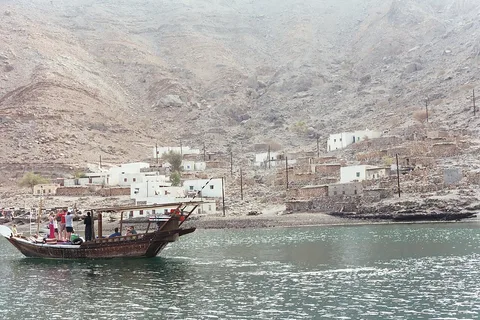
Oman's fjords, where the desert cliffs drop sheer into dolphin-filled water
Explore Musandam PeninsulaPhoto by Eckhard Pecher on Wikimedia Commons, CC BY 2.5 (https://commons.wikimedia.org/wiki/File:Musandam_fjord.jpg)
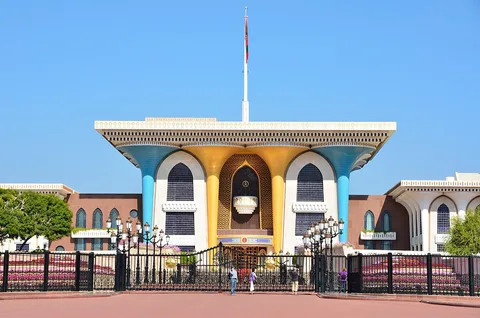
A capital between mountains and sea, where Arabia is at its most understated
Explore Muscat & the CoastPhoto by Tristan on Wikimedia Commons, CC BY 2.0 (https://commons.wikimedia.org/wiki/File:Al_Alam_Palace.jpg)
As checked on 20 October 2026, FCDO warns of a risk of further regional attacks after strikes that included Oman. Flight cancellations and airspace closures are possible, so review current advice and follow local instructions before and during a trip.
For a heritage-focused introduction, look to Muttrah Fort’s views over the old harbour and the National Museum in Old Muscat. The museum’s maritime instruments and early Islamic manuscripts offer details to explore beyond the buildings themselves.
Nizwa has a circular fort that served both defensive and governing roles, with a neighbouring souq selling handicrafts. At Bahla, mud-brick walls and towers on stone foundations form part of a fortified oasis settlement with palm groves.
Look beyond the forts to Oman’s aflaj too. These irrigation channels show how communities share water for farms and households, with Falaj Daris among the five systems on the World Heritage List. In public places, dress modestly, covering your upper arms and wearing clothing that reaches below the knee.
October to April is the best time for most of Oman: 22-30C on the coast, cooler in the mountains. Summer (May to September) is very hot on the coast (35-45C) and in the desert. The Dhofar region around Salalah has a unique monsoon season (khareef, July to September) that creates green, misty landscapes and draws visitors from across the Gulf.
As checked on 20 October 2026, FCDO warns of regional attack risks and possible flight cancellations or airspace closures. Check current advice before planning a visit.
Destination photographs, not photographs of a specific holiday deal. Images resized for display.
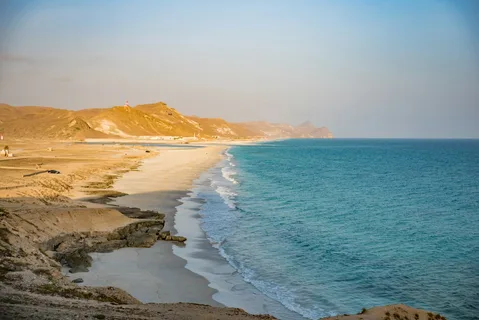
Frankincense UNESCO sites, monsoon greenery and Oman's hidden southern coast
Explore Salalah & the Dhofar CoastPhoto by Monika Guzikowska on Unsplash (https://unsplash.com/photos/a-sandy-beach-next-to-a-body-of-water-b5V0b6KObMc)
Muscat (MCT): 7 hours from London. Direct flights from Heathrow with Oman Air and BA. Oman Air also operates from Manchester. The airport is about 30 minutes from the main hotel areas.
Oman is often combined with the UAE: Dubai to Muscat is about 4.5 hours by road or a 1-hour flight. Abu Dhabi to Muscat is about 4 hours by road.
Shuwa is lightly spiced meat cooked slowly by roasting. Qabooli puts rice together with nuts, raisins and mutton or beef, while harees is a meat stew thickened with wheat. For something sweet, look for dates or soft halwa. Coffee and halwa form part of Omani hospitality: kahwa is black coffee flavoured with cardamom and served in small cups. Ask your host about the ingredients if you have dietary requirements.
Currency: Omani Rial (OMR). UK cards widely accepted in Muscat. Cash useful outside the capital.
Language: Arabic. English is widely spoken in Muscat, hotels and tourist areas.
Time zone: GMT+4 (same as the UAE).
Visa and entry: see Visa Advisory above.
Plug type: Type G (same as the UK). No adaptor needed.
Alcohol: Available in licensed hotels and restaurants. Not available in public or shops.
Dress code: Modest dress expected. Cover shoulders and knees in public. Swimwear is fine at hotel beaches and pools.
Emergency number: 9999.
The main mosque of Muscat has the world's second-largest hand-woven Persian carpet and a central Swarovski chandelier eight metres tall. Open to non-Muslim visitors outside prayer times.
A 40-minute walk and a short swim through a canyon lead to a hidden cave with a waterfall crashing through a shaft of light. The approach is as dramatic as the destination.
The Musandam Peninsula juts into the Strait of Hormuz with dramatic limestone cliffs dropping into sheltered inlets. Traditional dhow cruises from Khasab spot dolphins and drop anchor for snorkelling.
Soft orange dunes stretch 180 kilometres inland from the coast, with Bedouin camps running quad-biking, camel rides and stargazing nights. The drive in requires a 4x4 and deflated tyres.
The 17th-century fort dominates Oman's former capital, with a Friday morning livestock market in the adjacent souq where Omanis still bargain for goats, cattle and silver khanjar daggers.
A chain of nine protected islands an hour's boat ride from Muscat, with healthy coral, resident green turtles and seasonal whale shark encounters. The best snorkelling in the Arabian Peninsula.
Not required
UK passport holders can visit Oman visa-free for stays up to 14 days (since December 2020). For longer stays up to 30 days, apply for an eVisa online at evisa.rop.gov.om (cost OMR 20, approx £42). Passport must be valid for at least 6 months from arrival. Proof of onward travel, accommodation and travel insurance required. Effective May 2026 — check gov.uk/foreign-travel-advice/oman for current rules before booking.
No mandatory vaccinations. Be up to date with routine UK vaccinations including tetanus; hepatitis A recommended. Tap water is generally safe in Muscat and main towns (mostly desalinated); bottled water often preferred. Healthcare in Muscat is good in private hospitals (Royal Hospital, Muscat Private Hospital); remote areas more basic. Strong sun and extreme heat in summer (May-Sep 45°C+) — sun protection and hydration essential. Comprehensive travel insurance with full medical and evacuation cover essential. Effective May 2026 — check fitfortravel.nhs.uk for any updates before travel.
Entry and health requirements can change. Check current official travel advice (opens in a new tab) for your passport and circumstances.
Confirm dates and arrangements before making travel plans.
A month of traditional Omani crafts, folk music, horse shows, camel races and firework displays across Muscat's amphitheatres and parks, showcasing the culture of each governorate.
The monsoon turns the Dhofar region green for three months each summer, drawing Gulf visitors to waterfalls, cool misty mornings and the annual Salalah Tourism Festival.
The 18 November celebrations of the Sultanate's independence are marked with flag-flying, parades, fireworks over Muscat harbour and illuminated buildings across the capital.