Machu Picchu at Sunrise
The 15th-century Inca citadel sits on a ridge at 2,430 metres above the Urubamba River. The Sun Gate viewpoint is reached with a dawn bus from Aguas Calientes or the four-day Inca Trail trek.
An Inca citadel in the clouds, the world's best food scene and a civilisation still written in the stones.
Peru brings Inca stonework in Cusco and Machu Picchu together with Lima’s historic centre and Arequipa’s volcanic-stone architecture. Give the cities their own time, with meals and closer looks at the buildings alongside the archaeological sites.
Monthly guide averages and suggested seasons. These are not a weather forecast; conditions vary within a destination.
| Month | Average high (°C) | Rainfall (mm) | Season |
|---|---|---|---|
| Jan | 20 | 160 | Low season |
| Feb | 20 | 135 | Low season |
| Mar | 20 | 105 | Shoulder season |
| Apr | 20 | 40 | Recommended |
| May | 19 | 10 | Recommended |
| Jun | 18 | 5 | Recommended |
| Jul | 17 | 5 | Recommended |
| Aug | 17 | 5 | Recommended |
| Sep | 18 | 20 | Recommended |
| Oct | 19 | 35 | Recommended |
| Nov | 19 | 65 | Shoulder season |
| Dec | 20 | 115 | Low season |
There are no current Peru deals on TripBuster. An independent travel expert can help you explore dates, hotels and a budget that works for you.
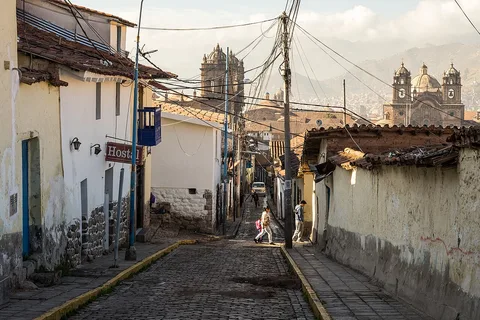
A 15th-century cloud-forest Inca citadel, 3,400m colonial capital and the world's most bucket-list archaeology
Explore Cusco, Machu Picchu & the Sacred ValleyPhoto by tomscoffin on Wikimedia Commons, CC BY 2.0 (https://commons.wikimedia.org/wiki/File:Vista_Calle_Suecia.jpg)
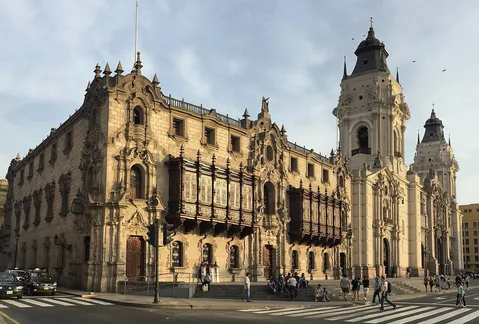
World-leading ceviche, the best food scene in the Americas and a colonial old town above the Pacific.
Explore LimaPhoto by David Felipe Ruiz Hoyos on Wikimedia Commons, CC BY-SA 4.0 (https://commons.wikimedia.org/wiki/File:Bas%C3%ADlica_Catedral_Metropolitana_de_Lima_%28cropped%29.jpg)
Start in Lima with the historic centre around Plaza de Armas and the San Francisco convent complex, then make room for the city’s food. Ceviche, causa and lomo saltado offer different introductions to its cooking.
Cusco deserves time beyond the journey to Machu Picchu. Inca stonework and street patterns sit alongside colonial churches and houses, while Ollantaytambo, northwest of the city, has terraces, old streets and water channels to explore. At Machu Picchu, the arrangement of buildings and terraces along a mountain ridge is as much a part of the visit as any single view. Arequipa provides another architectural focus, with sillar stone, arcades and courtyards in its historic centre.
Plan Machu Picchu around confirmed tickets, the circuit you have selected and transport arrangements. Protests and weather can disrupt access, including trains, so check with providers before travel and keep some flexibility. Advice checked on 20 October 2026 also warns of El Niño-related flooding and landslides through April 2027. FCDO advises against all but essential travel to parts of Peru; read the current regional advice before setting your route and follow local instructions.
May to September (dry season in the highlands and Machu Picchu at 15-20°C). Lima is mild year-round (15-25°C). The Amazon is hot and humid year-round. June to August is peak season. Shoulder months (April, October) offer fewer crowds.
Destination photographs, not photographs of a specific holiday deal. Images resized for display.
No direct flights from the UK. Connect via Madrid, Amsterdam, Bogota or Miami to Lima Jorge Chavez Airport (LIM). Flight time 12-15 hours via connection. Internal flights from Lima to Cusco (1.5 hours), Puerto Maldonado (1.5 hours) and Juliaca/Lake Titicaca (1.5 hours). The train from Cusco/Ollantaytambo to Machu Picchu (Aguas Calientes) is operated by PeruRail and Inca Rail.
In Lima, try causa, a potato dish with fillings that may include poultry, seafood or avocado. Ají de gallina combines shredded chicken with peppers, bread and milk, while lomo saltado reflects Chinese influence through its combination of meat, potato, onion, tomato and soy sauce. Ceviche is another staple to look for on seafood menus. Chicha morada, made from purple corn, gives you a local drink to try alongside the meal.
Currency: Peruvian Sol (PEN). Language: Spanish and Quechua. Time zone: PET (GMT-5). Visa and entry: see Visa Advisory above. Plug type: Type A/B/C (US and European, bring a universal adapter). Tap water: Not safe, drink bottled water. Altitude: Cusco sits at 3,400m. Acclimatise for at least one day before activity. Coca tea (mate de coca) helps. Tipping: 10% in restaurants.
The 15th-century Inca citadel sits on a ridge at 2,430 metres above the Urubamba River. The Sun Gate viewpoint is reached with a dawn bus from Aguas Calientes or the four-day Inca Trail trek.
Peru's national dish is raw fish cured in lime, chilli and red onion, served with sweet potato and corn. Central, Maido and Kjolle regularly place on the World's 50 Best list. Budget spots are equally good.
The Urubamba Valley below Cusco holds Ollantaytambo's fortress-village, the Sunday market at Pisac, and the concentric agricultural terraces at Moray, used by the Incas as a high-altitude lab.
The former Inca capital at 3,400 metres has Spanish colonial churches built directly on Inca stone walls. The Plaza de Armas, Qorikancha sun temple and San Blas artisan district are the walking highlights.
The world's highest navigable lake sits at 3,812 metres on the Bolivian border. Day trips from Puno visit the Uros people's floating reed islands and Taquile's hand-woven textiles.
Vinicunca rises to 5,200 metres with mineral-streaked slopes in red, ochre, turquoise and purple. A challenging day trip from Cusco involving pre-dawn starts and thin-air walking. Acclimatise first.
Not required
UK passport holders can visit Peru visa-free for stays up to 183 days (the exact period is set by the immigration officer on arrival, often 90 or 183 days). Passport must be valid for at least 6 months from arrival. On arrival you receive a Tarjeta Andina de Migracion (TAM, now usually digital) — keep this for departure. Proof of onward travel and accommodation may be requested. Yellow fever certificate may be requested for onward travel within the region. Effective May 2026 — check gov.uk/foreign-travel-advice/peru for current rules before booking.
No mandatory vaccinations. Be up to date with routine UK vaccinations including tetanus; hepatitis A and typhoid recommended. Dengue, Zika and chikungunya present in lowland and Amazon areas — use mosquito repellent and cover skin. Yellow fever vaccination required for travel to the Amazon basin (Madre de Dios, Loreto, Ucayali, Amazonas, San Martin and parts of Cusco region) and strongly recommended for any jungle itinerary. Malaria risk in some lowland areas — prophylaxis recommended for those itineraries. Tap water is not safe — drink only bottled or boiled water. Healthcare in Lima and Cusco is reasonable in private clinics; remote areas basic. Altitude sickness is a real risk in Cusco (3,400m), Lake Titicaca and on the Inca Trail — ascend gradually and consider acetazolamide. Comprehensive travel insurance with full medical, altitude and evacuation cover essential (specifically covering trekking if relevant). Effective May 2026 — check fitfortravel.nhs.uk for any updates before travel.
Entry and health requirements can change. Check current official travel advice (opens in a new tab) for your passport and circumstances.
Confirm dates and arrangements before making travel plans.
The Inca Festival of the Sun takes over Cusco on 24 June with reenactments of the winter-solstice ceremony at Sacsayhuaman fortress, drawing 100,000 spectators for the procession and rituals.
The 28 and 29 July celebrations of Peru's independence from Spain in 1821 fill Lima's plazas with parades, military processions, pisco tastings and nationwide family festivities.
Peruvian families gather at cemeteries on 1 and 2 November with food, flowers and music to honour deceased relatives, the Andean tradition layered onto the Catholic calendar.