VIE
Vienna Airport
An arrival option to compare
Useful for Vienna and eastern Austria. For a western Alpine stay, compare Innsbruck or Salzburg and the onward transfer.
- Check flights for your dates
- Compare the complete onward journey
Alpine holidays and cities filled with music and history.
Austria combines Alpine valleys and lakes with cities such as Vienna, Salzburg and Innsbruck. Winter holidays often focus on skiing, while warmer months open up walking trails, cycling routes and lakeside stays. A city break offers museums, concert venues and coffee houses. The right base depends on whether you want mountain activities, a cultural itinerary or a mixture of both.
An arrival option to compare
Useful for Vienna and eastern Austria. For a western Alpine stay, compare Innsbruck or Salzburg and the onward transfer.
Average daytime highs · °C
Vienna (modelled reference) · 1991–2020
4 nights
Request a quote
Offered by AtoZ Travel
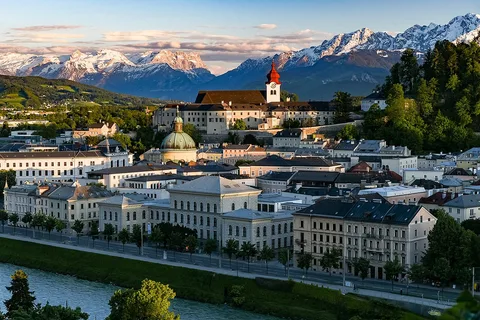
Mozart, the Sound of Music and Hallstatt's lakes in Austria's Baroque jewel
Explore Salzburg & the LakesPhoto by Jorge Franganillo on Wikimedia Commons, CC BY 2.0 (https://commons.wikimedia.org/wiki/File:Salzburg_%2848489551981%29.jpg)
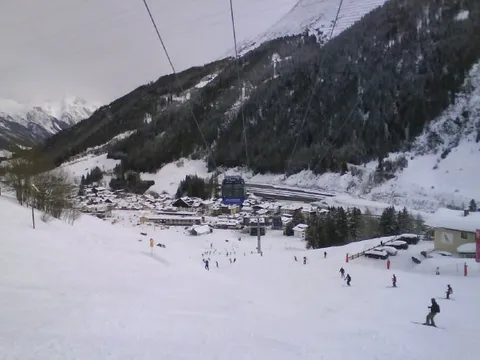
An Arlberg base with a railway station in the village.
Explore St AntonCharming villages, world-class skiing and legendary apres-ski
Explore The Austrian Alps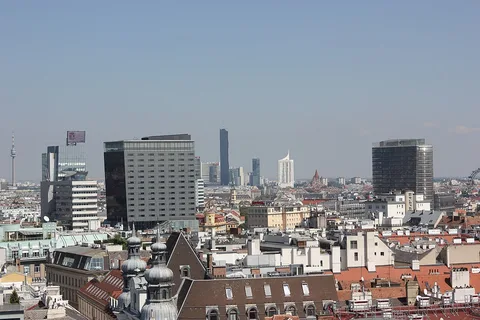
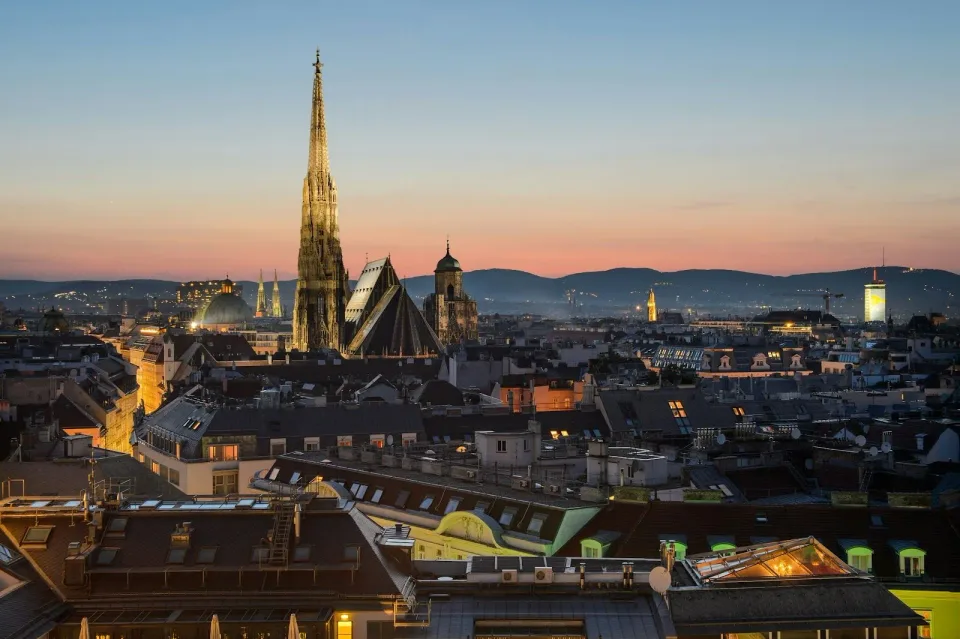
Imperial palaces, world-class opera and a coffeehouse culture so good UNESCO listed it.
Explore ViennaPhoto by Andrzej Otrębski on Wikimedia Commons, CC BY-SA 4.0 (https://commons.wikimedia.org/wiki/File:Wien_katedra_sw_Szczepana_widok_z_wiezy_6.jpg)
For a ski holiday, compare the resort altitude, terrain and lift access rather than treating all Alpine villages as interchangeable. St Anton is one option in the Arlberg region; other areas suit different experience levels and holiday styles.
Summer is a popular time for hiking and lake visits. Spring and autumn can work well for cities, but mountain transport and attractions may have seasonal closures. Winter visitors should check conditions and book any essential lessons ahead.
Austria has an extensive railway network, useful for combining cities and reaching some mountain towns. Confirm the final connection to your accommodation, particularly for late flights or ski luggage.
Vienna’s imperial history is visible in Schönbrunn and the Hofburg, but its cultural life also stretches to the Vienna State Opera and the MuseumsQuartier. Parks and palace gardens give you space between visits to the city’s buildings and collections.
Salzburg puts Mozart’s birthplace and residence within a historic city setting. Mirabell’s gardens and views from Hohensalzburg Fortress add outdoor stops, with the Salzach flowing below. In Innsbruck, the Golden Roof and colourful houses beside the Inn sit against a mountain backdrop. Ambras Castle adds art and decorated interiors to a stay in the city.
For a holiday around the water, the Salzkammergut brings together lakes such as Wolfgangsee and Traunsee with towns including Bad Ischl. Hallstatt adds a history shaped by salt. The Wachau follows the Danube past vineyard terraces, Dürnstein and Melk Abbey. Its wine taverns offer a setting for trying the region’s wines and food.
April to June and September to October at 15-25°C for city breaks. December for Christmas markets (Vienna and Salzburg are exceptional). January to March for skiing in the Alps. Summer (July-August) at 25-32°C.
Destination photographs, not photographs of a specific holiday deal. Images resized for display.
Long-term modelled averages for Vienna, not a forecast or an average for all of Austria. Local conditions, elevation and coastlines can differ from the approximately 0.5° × 0.625° model grid. Precipitation includes rain and the water equivalent of snow. TripBuster calculated mean daily highs and mean monthly precipitation totals from NASA Langley Research Center’s POWER project (Daily API v2.10.0, MERRA-2; accessed 12 October 2026).
| Month | Daytime high (°C) | Precipitation (mm) |
|---|---|---|
| Jan | 1.9 | 37.4 |
| Feb | 4.3 | 35 |
| Mar | 9.1 | 47 |
| Apr | 14.9 | 44.2 |
| May | 19.7 | 80.1 |
| Jun | 23.7 | 88 |
| Jul | 26 | 90.5 |
| Aug | 26 | 81.1 |
| Sep | 20.6 | 75.9 |
| Oct | 14.9 | 52.5 |
| Nov | 8 | 49 |
| Dec | 2.7 | 44.1 |
Source: NASA POWER / MERRA-2 (opens in a new tab), Vienna (modelled reference), 1991–2020.
Direct flights from London, Manchester, Edinburgh and Birmingham to Vienna (VIE, 2.5 hours) and Salzburg (SZG, 2 hours) with British Airways, easyJet, Ryanair, Wizz Air and Austrian Airlines. The CAT train connects Vienna Airport to the city in 16 minutes.
Wiener Schnitzel is a breaded veal escalope, fried and served with lemon, often accompanied by potatoes or salad. For something sweet, Kaiserschmarren breaks a pancake into small pieces with a dusting of icing sugar. Apfelstrudel wraps apples in thin pastry, with cinnamon and raisins among the familiar filling ingredients.
In the Wachau, look for Riesling or Grüner Veltliner from the region’s vineyard terraces. Wine taverns serve local wines alongside food, while apricots are another speciality associated with this stretch of the Danube.
Currency: Euro (€). Language: German (English widely spoken in cities). Time zone: CET (GMT+1). Visa and entry: see Visa Advisory above. Plug type: Type C/F (European two-pin). Tap water: Excellent. Driving: Right-hand side. Tipping: 5-10% in restaurants. GHIC: valid for emergency state-provided medical treatment.
The Arlberg, Kitzbuhel and Solden rank among the world's best-engineered ski resorts, with reliable snow, long runs and the tiroler apres-ski culture that invented the genre.
Habsburg palaces, gold-domed coffee houses serving proper sachertorte, and a classical music season that runs from the State Opera to the Musikverein.
The Austrian lakes around Hallstatt and Wolfgangsee in Salzkammergut offer postcard-perfect villages reflected in clear alpine water, ideal for swimming in summer.
Mozart's birthplace and the Sound of Music backdrop, with a baroque old town climbing up to Hohensalzburg fortress and Christmas markets that define the genre.
Not required
UK passport holders can visit Austria visa-free under Schengen rules: up to 90 days within any 180-day period for tourism or business. Passport must be valid for at least 3 months beyond planned departure and issued within the last 10 years. The EU Entry/Exit System (EES) has been in operation since 10 April 2026 — expect biometric registration on first entry. From Q4 2026 (October to December), UK travellers will also need to apply for an ETIAS travel authorisation in advance (€20, free for under 18s and over 70s), valid for up to 3 years. Effective May 2026 — check gov.uk/foreign-travel-advice/austria for current rules before booking.
No vaccinations required. Be up to date with routine UK vaccinations including tetanus. UK GHIC card valid for emergency state-provided medical treatment. Tap water is excellent everywhere. Healthcare is excellent. Standard travel insurance recommended, with winter sports cover essential for ski trips (rescue and helicopter evacuation can be expensive). Tick-borne encephalitis is present in forested areas — vaccination considered for hikers and campers from late spring to autumn. Effective May 2026 — check fitfortravel.nhs.uk for any updates before travel.
Entry and health requirements can change. Check current official travel advice (opens in a new tab) for your passport and circumstances.
Confirm dates and arrangements before making travel plans.
The world's most prestigious classical music and opera festival, taking over Salzburg's theatres and cathedrals for six weeks every summer.
Vienna, Salzburg and Innsbruck all host Christmas markets from late November, with gluhwein, handcrafts and roasted chestnuts in front of the cathedrals.