Finding your destination…
A little inspiration.
A new adventure.
Ten kilometres of Atlantic sand and 300 days of sunshine.
Ten kilometres of golden Atlantic sand backed by a promenade, with 300 days of sunshine a year and all-inclusive prices that make the Canaries look overpriced. Agadir is Morocco's no-nonsense beach resort and one of the best-value winter sun options from the UK.
Monthly guide averages and suggested seasons. These are not a weather forecast; conditions vary within a destination.
| Month | Average high (°C) | Rainfall (mm) | Season |
|---|---|---|---|
| Jan | 21 | 30 | Recommended |
| Feb | 22 | 30 | Recommended |
| Mar | 23 | 25 | Recommended |
| Apr | 24 | 15 | Recommended |
| May | 25 | 5 | Shoulder season |
| Jun | 26 | 2 | Shoulder season |
| Jul | 27 | 0 | Shoulder season |
| Aug | 28 | 1 | Shoulder season |
| Sep | 27 | 3 | Shoulder season |
| Oct | 26 | 20 | Recommended |
| Nov | 24 | 30 | Recommended |
| Dec | 22 | 35 | Recommended |
Agadir as a resort experience centres on the beach and the promenade. The 10-kilometre sandy beach is wide, gently sloping and backed by a continuous strip of hotels, restaurants and cafes. The sand is golden, the sunsets over the Atlantic are excellent, and the sunshine statistics (300+ days a year) are the strongest on Morocco's coast.
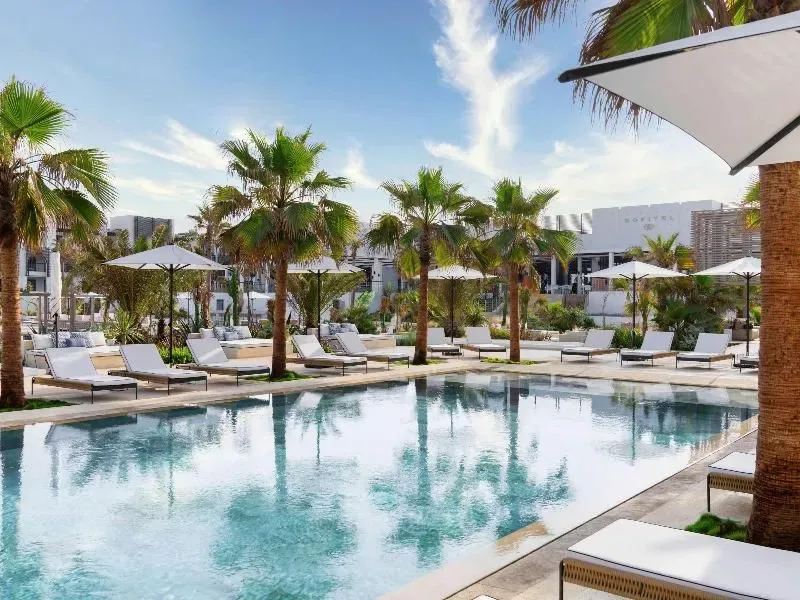
The all-inclusive hotel strip runs along the beachfront and the main road behind. Properties include RIU Palace Tikida, Iberostar Founty Beach, Robinson Club, Sofitel and several Moroccan-owned resort hotels. The quality has improved significantly in recent years, and the pricing undercuts comparable Canary Islands and Greek resorts.
The Souk El Had, about 15 minutes' walk from the beach hotels, is Agadir's main market: a large, covered souk selling spices, argan oil, leather goods, ceramics and clothing. It is less overwhelming than Marrakech's medina and a good introduction to Moroccan market culture for first-time visitors.
The marina has a cluster of restaurants and cafes overlooking the fishing boats. The Kasbah ruins on the hill above the city (destroyed in the 1960 earthquake) offer panoramic views of the bay and the coast.
Taghazout, a former fishing village 20 minutes north, has become one of the best surf destinations in Morocco. Surf schools, yoga retreats and a bohemian village atmosphere have transformed it into a secondary draw for the Agadir area. Paradise Valley (1 hour into the hills) has natural swimming pools in a palm-lined gorge and makes an excellent half-day excursion.
Functional, sunny and beach-focused. Agadir does not have the cultural intensity of Marrakech or the character of Essaouira. It is a purpose-built resort city designed to deliver sunshine, sand and value. For visitors who want a simple beach holiday with a Moroccan flavour, it does the job well.
Year-round. Winter (November to March) is the peak UK season: 18-22C, sunny, good value. Summer (June to September) is warmer (25-32C) and the best for swimming. The Atlantic is coolest in winter (18C) and warmest in late summer (22C).
Agadir beach: 10 km of golden sand, gently sloping, backed by promenade and hotels. The water is Atlantic (cooler than the Mediterranean, 18-22C depending on season). Swimmable from May to October. The beach is well maintained with sunbed hire and lifeguards. Taghazout (20 min north) has surf beaches. Imourane (10 min south) is quieter.
The beachfront promenade is walkable. Petits taxis (orange taxis) run within the city (cheap, agree the fare or insist on the meter). Grand taxis run to Taghazout and surrounding areas. A hire car is useful for day trips (Essaouira, Paradise Valley). The airport is 30 minutes from the resort strip.
Taghazout surf village (20 min), Paradise Valley (1 hr), Essaouira (2.5 hrs), Taroudant walled city (1.5 hrs), Tiznit (1.5 hrs), Souss-Massa National Park (30 min south), Anti-Atlas mountains, airport (30 min).
The port fish market is the food highlight: fresh Atlantic fish and seafood grilled to order at outdoor tables for very low prices. The promenade restaurants serve a mix of Moroccan and international food. The all-inclusive resort restaurants are the main option for most visitors.
Try: grilled sardines at the port, tagine, couscous, fresh Atlantic fish, harira, msemen, and argan-oil-drizzled salads. Drink: Moroccan mint tea, fresh orange juice, and Moroccan wine or beer at licensed restaurants.
Golden Atlantic sand sweeps from the port to the marina, gently shelving and backed by an unbroken promenade of palm trees, cafes and the all-inclusive hotel strip, with swimmable water May to October.
Twenty minutes north, the former fishing village has become Morocco's surf capital, with Anchor Point, Killers and Panoramas pulling winter swells and dozens of schools and yoga retreats lining the bay.
An hour into the foothills of the High Atlas, a palm-lined gorge hides a string of natural swimming pools carved out of the rock, best reached on foot from the roadside car park.
The city's main covered market sits fifteen minutes inland from the beach hotels, stacked with argan oil, saffron, leather babouches and ceramics, and noticeably gentler on first-timers than Marrakech's medina.
The 16th-century hilltop fortress was levelled by the 1960 earthquake and the shell now sits high above the bay, the best vantage point for sunset over the Atlantic and the lights of the city below.
At the working port's open-air fish stalls the morning's catch goes straight onto charcoal grills, with sardines, prawns and calamari served on paper plates for a few pounds a head.
Confirm dates and arrangements before making travel plans.
Four free nights of Amazigh music and world-music headliners take over the Place Al Amal stage, drawing crowds of 400,000 across the city in mid-July.
International longboard and shortboard competitions run at Anchor Point when the autumn Atlantic swells arrive, with beach parties and live music along the bay.
6 November sees Moroccan flags across the promenade and fireworks over the marina to mark the 1975 march into the Western Sahara.