FAO
Faro Airport
A gateway to consider
The Algarve’s principal airport. Road transfer times vary between eastern resorts and the western coast.
- Confirm the airport on your flight booking
- Check whether hotel or port transfers are included
Atlantic beaches, harbour towns and coastal walks.
The Algarve stretches across southern Portugal, with distinct resorts along its Atlantic coast. Albufeira and Vilamoura offer different styles of busy holiday base, while towns such as Tavira and Monte Gordo sit farther east. Western areas around Lagos and Alvor have their own beaches and landscapes.
A gateway to consider
The Algarve’s principal airport. Road transfer times vary between eastern resorts and the western coast.
Average daytime highs · °C
Faro, Portugal (modelled reference) · 1991–2020
The Algarve stretches across southern Portugal, with distinct resorts along its Atlantic coast.
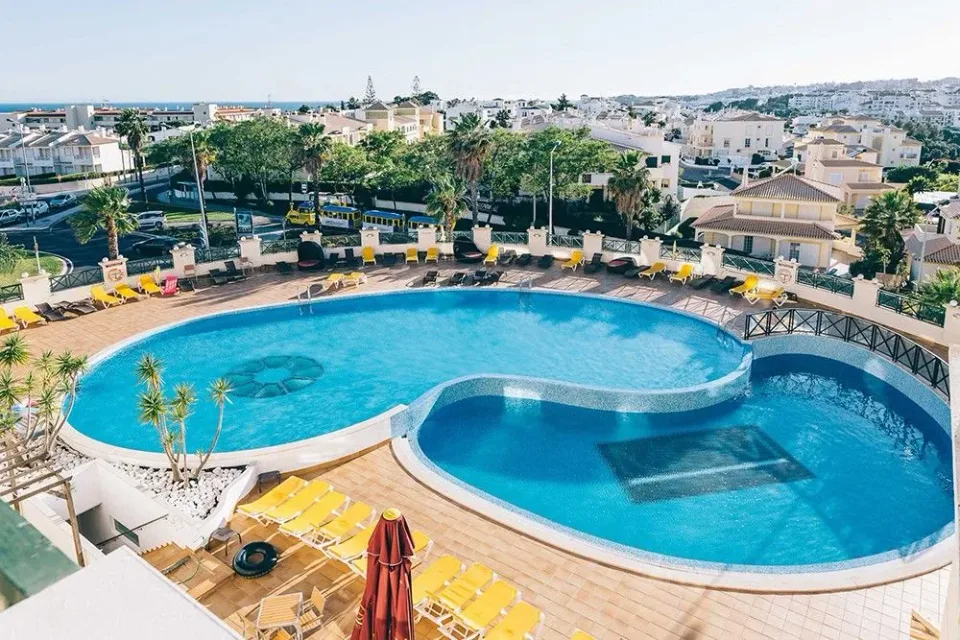
All-inclusive cliffs above the Algarve's busiest nightlife strip.
Explore AlbufeiraA walled fishing town and the Algarve's most beautiful cliff coves.
Explore LagosThe last lighthouse before America, cliff sunsets and the Algarve's wild Atlantic edge
Explore Sagres, Cape St Vincent & the Costa VicentinaA Roman bridge over a fishing river, barrier island beaches and octopus capital 5 minutes west
Explore Tavira & the Eastern AlgarvePortugal's biggest marina, six championship golf courses and 6km of red-cliff beach
Explore VilamouraFaro Airport serves much of the region, but transfer times increase towards its ends. Compare the exact address of your hotel and the walking route to the beach; cliffs, steps and headlands can make a short map distance less straightforward.
Summer is busy, while spring and autumn can suit walking and sightseeing. Check seasonal opening dates for boat trips, pools and resort facilities. Follow beach flags and keep away from unstable cliff edges when exploring the coast.
Summer is busy on the coast and inland temperatures can be high. Spring and autumn can suit walking and sightseeing, but Atlantic sea conditions vary throughout the year. Check beach flags and local advice before swimming.
The Algarve is Portugal's southernmost region, a 150-kilometre strip of Atlantic coastline that has been one of the UK's favourite holiday destinations since the 1990s. It earns that loyalty every year.
The coastline is spectacular. Towering ochre cliffs have been carved by the sea into arches, stacks, grottos and hidden beaches that look like they belong in a screensaver. The central Algarve around Albufeira and Vilamoura is the most developed, with big resort hotels, golf courses and a well-established tourist infrastructure. The western Algarve around Lagos and Sagres is wilder and more independent, attracting surfers, hikers and travellers who prefer character over convenience.
Golf is a major draw, with over 40 courses in the region including several that regularly feature in European top-ten lists. And because the Algarve sits on the same latitude as northern Morocco, the climate is generous: 300 days of sunshine a year and mild winters that keep the golf courses busy even in January.
The combination of dramatic coastal scenery, reliable weather, excellent golf, good-value dining and a well-worn British tourist infrastructure makes the Algarve incredibly easy to sell. The short flight time (under 3 hours) and the fact that Portugal shares the UK time zone are genuine selling points that no other Mediterranean destination can match.
April to October is the main season. July and August are the hottest months (28-35C) and the busiest. June and September offer the best balance: 25-30C, warm sea, lower prices. April and May are excellent for golf and walking (20-25C). October is still pleasant. Winter (November to March) is mild (15-18C) with some rainy spells but plenty of sun. Golf is playable year-round.
Destination photographs, not photographs of a specific holiday deal. Images resized for display.
Long-term modelled averages for Faro, Portugal, not a forecast or an average for all of Algarve. Local conditions, elevation and coastlines can differ from the approximately 0.5° × 0.625° model grid. Precipitation includes rain and the water equivalent of snow. TripBuster calculated mean daily highs and mean monthly precipitation totals from NASA Langley Research Center’s POWER project (Daily API v2.10.0, MERRA-2; accessed 12 October 2026).
| Month | Daytime high (°C) | Precipitation (mm) |
|---|---|---|
| Jan | 15.3 | 57 |
| Feb | 15.7 | 48.7 |
| Mar | 17.3 | 58.1 |
| Apr | 18.9 | 54.6 |
| May | 21.7 | 34.4 |
| Jun | 25.2 | 6.6 |
| Jul | 27.9 | 1.2 |
| Aug | 27.9 | 3.2 |
| Sep | 25.4 | 22.4 |
| Oct | 22.3 | 66.7 |
| Nov | 18.6 | 84.9 |
| Dec | 16.2 | 85.1 |
Source: NASA POWER / MERRA-2 (opens in a new tab), Faro, Portugal (modelled reference), 1991–2020.
Fly into Faro Airport (FAO), the Algarve's only airport, around 2 hours 55 minutes from London. Direct flights from Gatwick, Luton, Stansted, Manchester, Birmingham, Bristol, East Midlands, Leeds Bradford, Newcastle, Glasgow, Edinburgh and Belfast with easyJet, Ryanair, Jet2, TUI, British Airways, Wizz Air and TAP. Transfers: Albufeira 40 minutes, Vilamoura 25 minutes, Lagos 1 hour 15 minutes.
The Algarve eats simply and well. Grilled fish and seafood dominate, served at beach shacks and harbourside restaurants alike. Cataplana (seafood stew in a copper pot) is the regional signature. Frango piri-piri (peri-peri chicken) originated here. Bifana (pork sandwich) is the go-to street snack.
Try: chargrilled sardines on bread, arroz de marisco (seafood rice), amêijoas à Bulhão Pato (clams in garlic, coriander and white wine), and dom rodrigos (an Algarve sweet made with egg yolks and almonds). House wine with lunch is rarely more than €2-3 a glass.
Families and golfers are the core markets. Couples do well everywhere, particularly in the western Algarve. Albufeira's strip caters to younger groups. Vilamoura and Quinta do Lago suit luxury and golf seekers. Lagos and Sagres attract independent travellers and surfers. The Algarve also has a strong retired expat community, making it a comfortable long-stay winter sun destination.
The ochre cliff formations, sea arches and grottoes off Lagos are reached by kayak or traditional fishing boat, with Benagil Cave (the cathedral-like sea cavern with a circular opening in the ceiling) the most famous stop.
The 6km ribbon of golden sand between Vilamoura and Albufeira runs beneath red-and-white layered sandstone cliffs, with Blue Flag status, lifeguards and the dramatic Falesia clifftop walking path above.
The Algarve has 40+ courses including five that regularly feature in European top-10 lists: Old Course Vilamoura (Frank Pennink 1969), Quinta do Lago, Vale do Lobo Royal, San Lorenzo and Penina.
The red sandstone hilltop fortress in the Algarve's former Moorish capital 30 minutes inland has restored ramparts, a 13th-century cistern, the Gothic cathedral below and the yearly medieval fair in August.
Mainland Europe's most south-westerly point at the Algarve's western tip has the 1846 lighthouse, dramatic 75-metre cliffs, and the sunset view that ancient Romans considered the end of the world.
Confirm dates and arrangements before making travel plans.
The European Tour's Portuguese Masters across four days in mid-October at the Dom Pedro Victoria Course in Vilamoura closes the European autumn swing.
Ten days in mid-August transform the Moorish capital's hilltop castle into a medieval encampment with jousting, period markets, street theatre and Andalusian-inspired food.
The Algarve's biggest cultural fair across nine days in mid-August brings traditional Portuguese food, live fado, artisan markets and folk dancing to Lagoa's showground.