Serengeti Migration
Over 1.5 million wildebeest, 400,000 zebra and 300,000 gazelle follow the rains across the 14,763-square-kilometre plain. The Grumeti and Mara river crossings between July and October are the dramatic peaks.
The Great Migration, a volcanic crater full of lions and a spice island to finish.
Tanzania brings the Serengeti’s open plains and Ngorongoro’s volcanic crater together with the trading heritage of Zanzibar. Follow wildlife with a guide, then give Stone Town’s carved doors and winding streets time of their own.
Monthly guide averages and suggested seasons. These are not a weather forecast; conditions vary within a destination.
| Month | Average high (°C) | Rainfall (mm) | Season |
|---|---|---|---|
| Jan | 32 | 85 | Recommended |
| Feb | 32 | 95 | Recommended |
| Mar | 32 | 170 | Low season |
| Apr | 31 | 360 | Low season |
| May | 30 | 195 | Low season |
| Jun | 29 | 55 | Recommended |
| Jul | 29 | 55 | Recommended |
| Aug | 30 | 70 | Recommended |
| Sep | 31 | 70 | Recommended |
| Oct | 32 | 85 | Recommended |
| Nov | 32 | 165 | Shoulder season |
| Dec | 31 | 200 | Shoulder season |
There are no current Tanzania deals on TripBuster. An independent travel expert can help you explore dates, hotels and a budget that works for you.
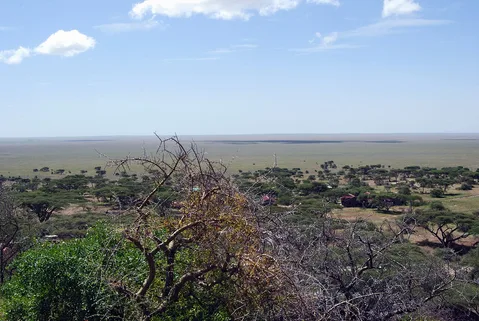
Wildebeest herds to the horizon, the largest unbroken caldera on Earth and the densest concentration of big cats in Africa.
Explore Serengeti & NgorongoroPhoto by Harvey Barrison on Wikimedia Commons, CC BY-SA 2.0 (https://commons.wikimedia.org/wiki/File:Eastern_Serengeti_2012_05_31_2828_%287522638524%29.jpg)
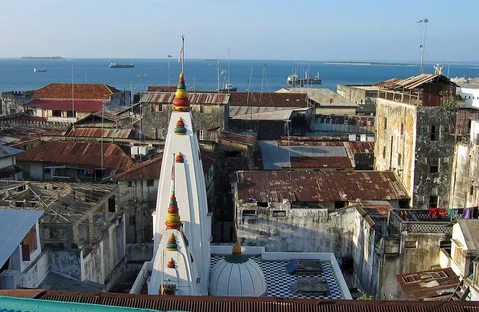
A UNESCO Stone Town of carved doors and spice traders, white-sand beaches and the perfect chapter after a Tanzania safari.
Explore ZanzibarPhoto by neiljs on Wikimedia Commons, CC BY 2.0 (https://commons.wikimedia.org/wiki/File:Temple_at_Zanzibar.jpg)
Start with the kind of landscape you want to explore. Serengeti National Park has broad savannah plains, rocky outcrops and herds of wildebeest, zebras and gazelles. Ngorongoro adds a different setting: a volcanic crater within a larger conservation area of highland plains and forest. These are places to watch wildlife with patience, without treating any particular sighting as a promise.
Tarangire belongs to the northern safari circuit too, with baobabs and elephants among its defining features. Kilimanjaro offers another focus, its volcanic mass rising above the plains with forest around the mountain. Choose the places that interest you most, then discuss a workable route with your operator.
On Unguja, Stone Town changes the emphasis to Swahili trading history. Its courtyard houses, carved wooden doors and winding streets show connections with Africa, Arabia, India and Europe. Leave room to notice the buildings between larger stops. For national parks, check the required permits and follow wardens’ advice.
Tanzania has two rainy seasons: the long rains (March to May, the low season, many camps close) and the short rains (November to December, usually manageable). The dry seasons (January to February and June to October) are best for safari. The Serengeti calving season is January to March in the south. The river crossings are July to October in the north. Zanzibar is warm year-round (25-32C), best June to October and December to February.
Explore the Serengeti: Take a guided wildlife drive through the savannah and look at the rocky outcrops as well as the animals.
Visit Ngorongoro Crater: Make its volcanic setting part of a wildlife-focused visit, following the conservation area’s rules.
Include Tarangire: Look for baobabs and wildlife on a guided safari, without counting on any one species appearing.
Consider Kilimanjaro’s landscape: Include the mountain and surrounding forest in your trip planning without assuming a summit climb is necessary.
Destination photographs, not photographs of a specific holiday deal. Images resized for display.
Walk through Stone Town: Pay attention to carved doors, courtyard houses and the changing views along its winding streets.
Kilimanjaro International Airport (JRO): the main safari gateway. No direct UK flights. Connect via Nairobi (Kenya Airways, 1 hr), Doha (Qatar Airways, direct), Amsterdam (KLM, direct) or Dubai. 1 hour from Arusha (the safari capital).
Julius Nyerere International Airport (DAR), Dar es Salaam: the commercial capital. Emirates direct from Dubai. Connect to Zanzibar (20 min flight).
Abeid Amani Karume Airport (ZNZ), Zanzibar: connect via Dar es Salaam, Nairobi or Doha.
Domestic flights from Arusha/JRO to the Serengeti (1-1.5 hrs with Coastal Aviation, Auric Air) and to Zanzibar (1.5 hrs).
Ugali is a firm porridge made from maize or cassava flour, while pilau offers seasoned rice. Try nyama choma if you enjoy meat cooked over charcoal, or look for ndizi kaanga or choma, fried or grilled plantains or bananas.
Coffee gives you another way into the country’s food culture. The Kilimanjaro area has a coffee-growing tradition, with farm visits that explain the journey from berry to cup. Ask about current arrangements rather than assuming every farm welcomes visitors.
Currency: Tanzanian Shilling (TZS). US Dollars widely accepted (and preferred for park fees). UK cards in hotels.
Language: Swahili and English.
Time zone: GMT+3.
Visa and entry: see Visa Advisory above.
Plug type: Type G (UK three-pin) and Type D. UK plugs work in most hotels.
Health: Malaria prophylaxis recommended. Yellow fever certificate required if arriving from a country with risk of yellow fever transmission.
Zanzibar mandatory insurance: Since October 2024, all visitors to Zanzibar must purchase mandatory inbound travel insurance through the Zanzibar Insurance Corporation (approximately US$44, valid for 92 days). This is a separate requirement from your own travel insurance and cannot be substituted.
Tipping: Expected for safari guides ($15-25/day) and lodge staff.
Emergency number: 112 or 114.
Over 1.5 million wildebeest, 400,000 zebra and 300,000 gazelle follow the rains across the 14,763-square-kilometre plain. The Grumeti and Mara river crossings between July and October are the dramatic peaks.
A collapsed volcanic caldera 19 kilometres across and 600 metres deep holds a permanent population of 25,000 large animals, including the Big Five, flamingos and hippos, on the crater floor.
The UNESCO-listed old town of Zanzibar City has narrow Swahili-Arab-Indian alleys, carved wooden doors studded with brass, a former slave market, and the Forodhani gardens night food market.
The calm-water beaches of Nungwi and Kendwa on the north coast and Paje and Jambiani on the east have 8-kilometre stretches of white sand, dhow harbours and post-safari boutique resorts.
Dawn launches from camps on the Grumeti and central Serengeti drift a thousand metres above the plains with giraffe, elephant and buffalo grazing below. A champagne bush breakfast follows.
Africa's highest peak rises to 5,895 metres on the Kenya border. The six-to-nine-day trek up the Machame, Lemosho or Marangu routes needs no technical climbing, only acclimatisation.
eVisa required
UK passport holders need a tourist visa for Tanzania. The eVisa is the recommended route — apply online at eservices.immigration.go.tz (cost US$50 for a single-entry 90-day tourist visa, processed within 10 working days; multiple-entry available for longer stays). Visa on arrival is also available at major airports (US$50 cash, USD only) but eVisa is strongly recommended. Passport must be valid for at least 6 months from arrival with at least one blank page. Yellow fever certificate required if arriving from a country listed as a transmission risk. Note: Zanzibar requires its own additional mandatory travel insurance ("Tembo Health Insurance", around US$44) purchased on arrival or in advance. Effective May 2026 — check gov.uk/foreign-travel-advice/tanzania for current rules before booking.
Yellow fever vaccination required for entry if arriving from a country listed as a transmission risk — strict enforcement (this includes onward travel from Kenya, Uganda, Rwanda or other endemic countries even after a short transit). Be up to date with routine UK vaccinations including tetanus; hepatitis A and typhoid recommended. Malaria risk year-round throughout the country except at altitude above 1,800m — antimalarial prophylaxis essential (consult travel clinic). Use DEET-based mosquito repellent and sleep under nets. Schistosomiasis (bilharzia) risk in Lake Victoria, Lake Tanganyika and other freshwater bodies — avoid swimming. Tap water is not safe — drink only bottled or boiled water. Healthcare in Dar es Salaam and Arusha is reasonable in private clinics; remote safari areas and Zanzibar more basic. Strong sun year-round; high altitude on Kilimanjaro climbs requires proper acclimatisation. Comprehensive travel insurance with full medical, evacuation and (if relevant) Kilimanjaro/diving cover essential. Effective May 2026 — check fitfortravel.nhs.uk for any updates before travel.
Entry and health requirements can change. Check current official travel advice (opens in a new tab) for your passport and circumstances.
Confirm dates and arrangements before making travel plans.
The Sauti za Busara music festival in February aside, December fills Stone Town with Mwaka Kogwa new year celebrations, Swahili wedding processions and Makunduchi's traditional mock fighting rituals.
The four-night Swahili music festival fills Zanzibar's Old Fort each February with pan-African performers, drawing 20,000 visitors and ranked among Africa's best live music festivals.
The 26 April celebrations of the 1964 unification of Tanganyika and Zanzibar fill Dar es Salaam's Uhuru Stadium with military parades, state ceremonies and the President's annual address.