Get to know Tunisia
Start in the Medina of Tunis, where souks and residential streets sit among palaces, mosques and historic gateways. It rewards attention to the whole neighbourhood, not just a list of monuments. Nearby Carthage tells its story through scattered remains on the Gulf of Tunis, including Punic ports, Roman baths and former residential areas.
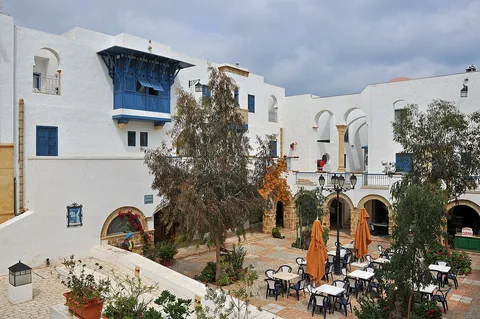
Sidi Bou Said offers a change of scene. Narrow paved streets climb between blue-and-white houses, with decorative doors, latticework and views towards the sea. The beaches around La Marsa and Gammarth provide another reason to spend time in this part of the country.
Kairouan’s walled medina has winding lanes, the Great Mosque and the historic Aghlabid water basins. El Jem’s stone amphitheatre shifts the focus to Roman public life, with its arcaded exterior and surviving arena. Choose the places that interest you and allow time to look closely. Check current FCDO regional advice before planning routes, as FCDO advises against travel to parts of western and southern Tunisia.
When to visit
April to June and September to November are the sweet spots at 22-30°C with warm sea temperatures and manageable crowds. July and August are peak season at 32-38°C, hot but ideal for beach holidays with reliable sunshine. The sea stays warm enough for swimming from May to October (22-27°C). Winter (December-March) is mild on the coast at 12-18°C, good for sightseeing and Saharan excursions when the desert heat is bearable. Ramadan dates shift annually and may affect restaurant availability in some areas.
Things to see and do
Walk through old Tunis: Explore the medina’s souks, historic gates and residential streets.
Explore Carthage: Look for the Punic ports and Roman remains across the archaeological site.
Stroll around Sidi Bou Said: Notice the blue latticework, studded doors and hillside streets overlooking the sea.
Discover Kairouan: See the walled medina and Aghlabid water basins, checking visitor arrangements before entering religious buildings.